
Names
Tajik: Қоти сиёҳ (сиёҳқот)
Latin: Ribes nigrum L.
Russian: Чёрная смородина
Arabic: Тудриҷ
Ishkashimi: Ёртӣ
Wakhi: Rараrот
Shughni-Rushani: Хъициц, хъцид
Yazgulami: Қарақот
English: Blackcurrant
Description
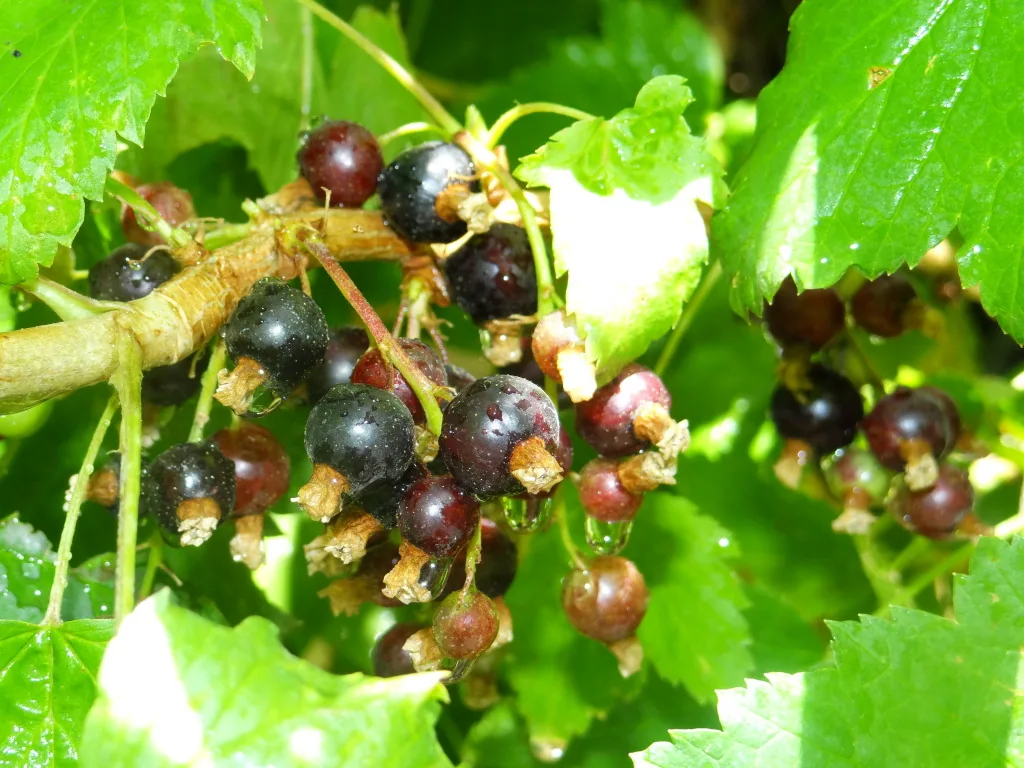
Blackcurrant is a perennial shrub.
Currants occur in three main types: black, white, and red.
Blackcurrant usually reaches approximately 1–2.5 m in height.
Mature shoots are greyish, while young shoots have a reddish-yellow tint and are densely covered with buds.
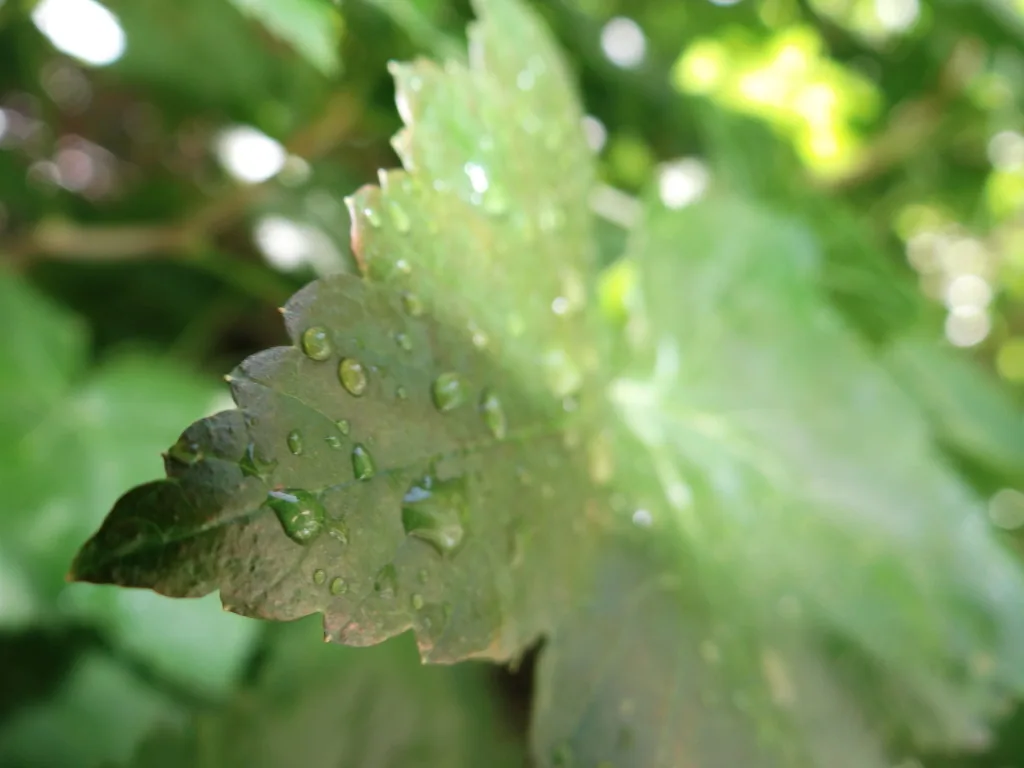
The leaves are up to about 10 cm long and 5–6 cm wide. They are arranged alternately, have petioles, consist of 3–5 lobes, and have a pleasant aroma.
The flowers have a five-part structure.
The fruits are spherical. Unripe berries are green and become black when fully ripe. They reach approximately 1 cm in size and have a sour taste.
In Badakhshan, blackcurrant occurs in Ishkashim, Shughnan, Roshtqala, Rushan, Vanj, and Darvoz.
It grows in valleys and mountain gorges at elevations of approximately 2,000–3,800 m above sea level.
Avicenna considered the nature of blackcurrant to be hot and moist in the second degree.
Parts used
The leaves and fruits of blackcurrant are used for medicinal purposes.
The berries are also consumed as food and valued as a source of vitamins.
Chemical composition
Blackcurrant fruits contain:
- vitamin C — 0.4–4%;
- vitamins B1, B2, and B6;
- vitamin D;
- vitamin E;
- vitamin P;
- vitamin K;
- vitamin PP;
- carotene;
- tannins;
- organic acids;
- pectins;
- catechins;
- anthocyanins;
- leucoanthocyanins;
- sugars;
- essential oil;
- flavonoids, including kaempferol, quercetin, and myricetin;
- cyanidin anthocyanins.
The listed macronutrients include:
- K;
- Ca;
- Mg;
- Fe.
The listed trace elements include:
- Mn;
- Cu;
- Zn;
- Co;
- Mo;
- Al;
- Ni;
- Pb;
- V;
- B.
Blackcurrant leaves contain vitamin C, essential oils, flavonoids, organic acids, and mineral substances.
The bibliographic material refers to works by J. Azonzod (2010), N. N. Safonov (2005), A. D. Turova (1974), Y. Nuraliev (1988), I. Khaitov (2005), D. Navruzshoev, and other authors.
Medicinal properties
Blackcurrant is attributed the following properties:
- anti-inflammatory;
- diaphoretic;
- diuretic;
- antidiarrhoeal;
- haemostatic;
- vitamin-rich.
Its fruits and leaves are primarily valued as sources of vitamins.
Use in traditional medicine
Abumansur Muwaffaq mentioned blackcurrant in traditional medicinal practice.
Roasted fruits were mixed with flour and applied as poultices to hard swellings around the ear and breast.
In traditional medicine, blackcurrant was also considered strengthening and was associated with helping to clear phlegm.
Blackcurrant mixed with honey was used as a strengthening remedy.
These uses belong to traditional and historical medical practice.
Information from Ahmad Siperi Khorasani
Ahmad Siperi Khorasani mentioned blackcurrant in connection with elevated blood sugar and high blood pressure.
This information belongs to traditional medicine and should not be interpreted as a modern treatment recommendation.
Use in the medicine of different countries
In traditional medical practice in France, Tibet, and Poland, blackcurrant leaves were used as a diuretic.
They were also used in connection with:
- rheumatic conditions;
- certain skin diseases;
- kidney disorders;
- bladder disorders.
Use of fruits and leaves
Blackcurrant fruits and leaves are used as sources of vitamins C and P.
They have been used in connection with vitamin deficiency, including hypovitaminosis and avitaminosis.
Blackcurrant has also been mentioned in relation to:
- elevated blood sugar;
- chronic inflammation of the stomach;
- intestinal disorders;
- anaemia;
- changes affecting blood vessels;
- inflammation of the liver;
- inflammation of the gallbladder;
- disorders of the bile ducts;
- dysentery;
- typhoid fever;
- influenza;
- certain other infectious diseases.
Many of these uses belong to traditional or earlier medical practice.
Blackcurrant juice
Blackcurrant juice has been used in connection with some disorders of the digestive system.
These include:
- inflammation of the stomach with reduced or absent secretion;
- gastric ulcers;
- duodenal ulcers.
The juice has also been used in connection with inflammatory conditions of the throat and respiratory tract, including:
- inflammation of the throat;
- accumulation of phlegm;
- dry cough;
- inflammation of the tonsils.
Instillation and inhalation were also used.
Blackcurrant juice has additionally been mentioned in connection with nosebleeds, gum disorders, haemorrhoids, and certain internal bleeding conditions.
Diuretic and diaphoretic use
Blackcurrant fruits and leaves have been used as a diuretic.
They were also used in connection with kidney stones and gallstones.
Blackcurrant is also attributed diaphoretic and mild laxative effects.
Culinary use
Blackcurrant berries are used at home to prepare:
- jam;
- juice;
- jelly;
- wine.
The fruits are valued both as food and as a source of vitamins.
Other traditional uses
Because of its traditionally attributed anti-inflammatory and diuretic properties, blackcurrant has been used in folk medicine for the prevention or relief of a number of conditions.
These include:
- gout;
- rheumatism;
- muscle pain;
- joint pain;
- certain skin conditions;
- boils;
- inflammatory skin disorders;
- kidney stones;
- gallstones;
- inflammation of the kidneys;
- inflammation of the bladder.
These uses belong to traditional medicine and are not presented as modern treatment recommendations.
Warning
Some of the medicinal properties and uses described on this page belong to folk medicine and historical medical sources.
Information about the use of blackcurrant for elevated blood sugar, high blood pressure, infectious diseases, liver disorders, kidney disorders, and other serious conditions should not be regarded as a substitute for medical diagnosis or treatment.
The information on this page is provided for educational, historical, and informational purposes.
When considering blackcurrant for medicinal use, especially in the presence of a chronic condition or while taking medication, consultation with a qualified medical professional is necessary.