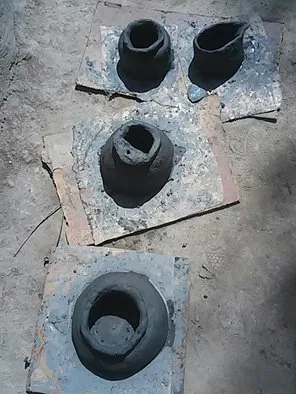
In order to contribute to the preservation of Pamir heritage, the “Ishkashim Voluntary School” of the public organization “Gulu Giyoh” began a small research project. Honjonova Hushnamo, a resident of Mulvoj village, still remembers who preserved old pitchers and knows the elders who have knowledge of creating these works of art. Our volunteer Honjonova Hushnamo interviewed the keepers of artistic knowledge in her village to learn what they remembered about pottery, the variations in the shapes of different pots, their functions, and where the necessary clay could be found.
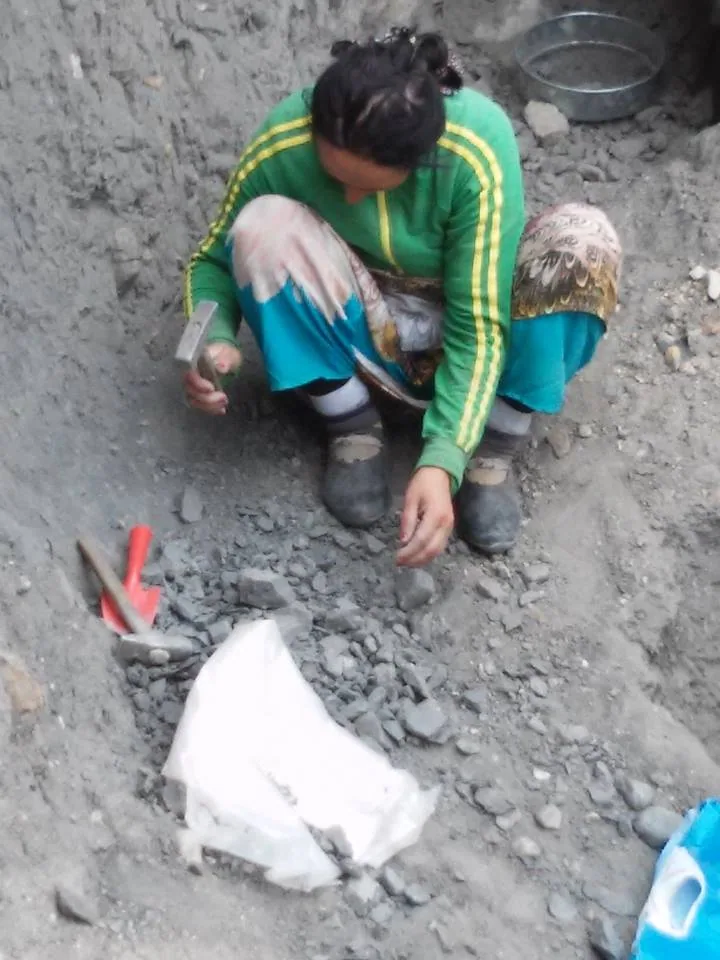
She found out that in the Gangideri valley near Mulvoj the right clay could be found, which is still used for tandoors. Hushnamo gathered members of her family, picks, and shovels for an expedition to the Gangideri valley. When they reached the place, they began to collect the clay together, sifted it, and obtained clean material.
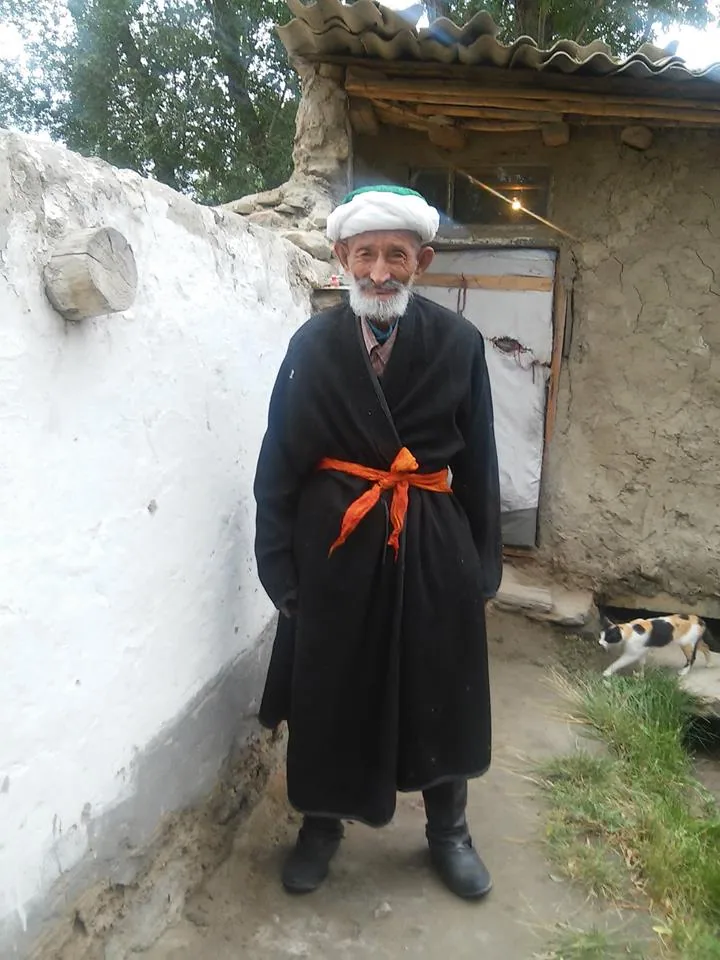
On the way back they met Gulzor, a well-known elder from Mulvoj. They told him the goal of their hike, and he shared valuable information from his rich life experience.
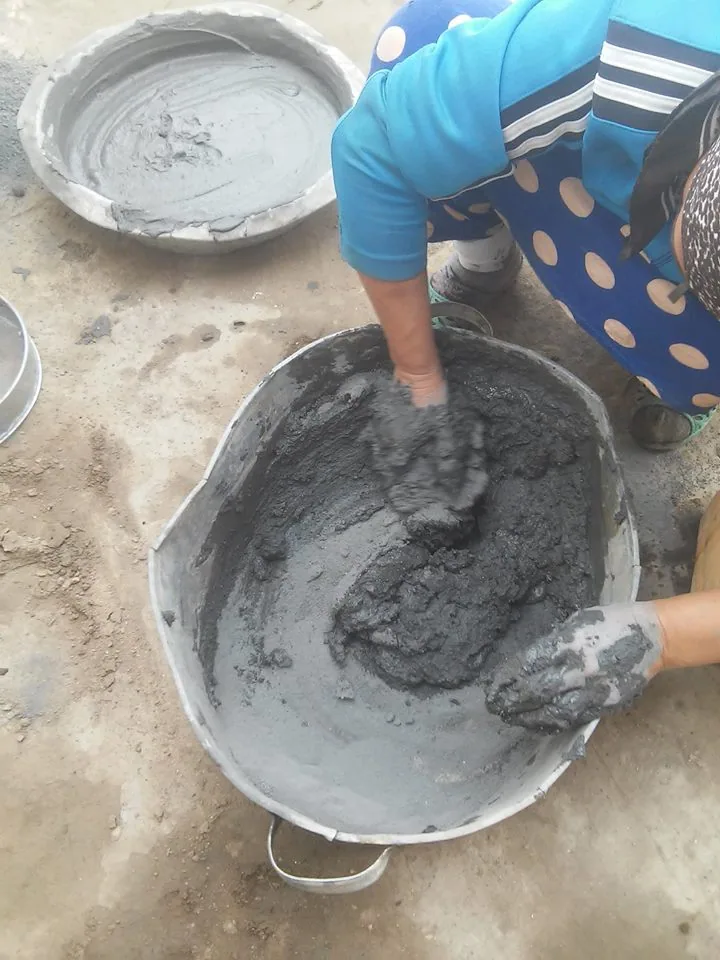
Hushnamo learned that the clay needed to be prepared and left for 4–5 days before making pitchers. Molded ceramics differ from ceramics made on a potter’s wheel. Molded pots are created gradually from the base, with the components drying step by step. In the past, when the pots were finished, they were collected in one place and surrounded with firewood and dung. To make the pots properly, the fire had to be kept burning from evening until morning. After this, the pitchers took on their characteristic color, depending on the type of clay, and were ready for use. When the volunteers reached the house, Hushnamo kneaded the clay just as Gulzor had told her and began to wait.
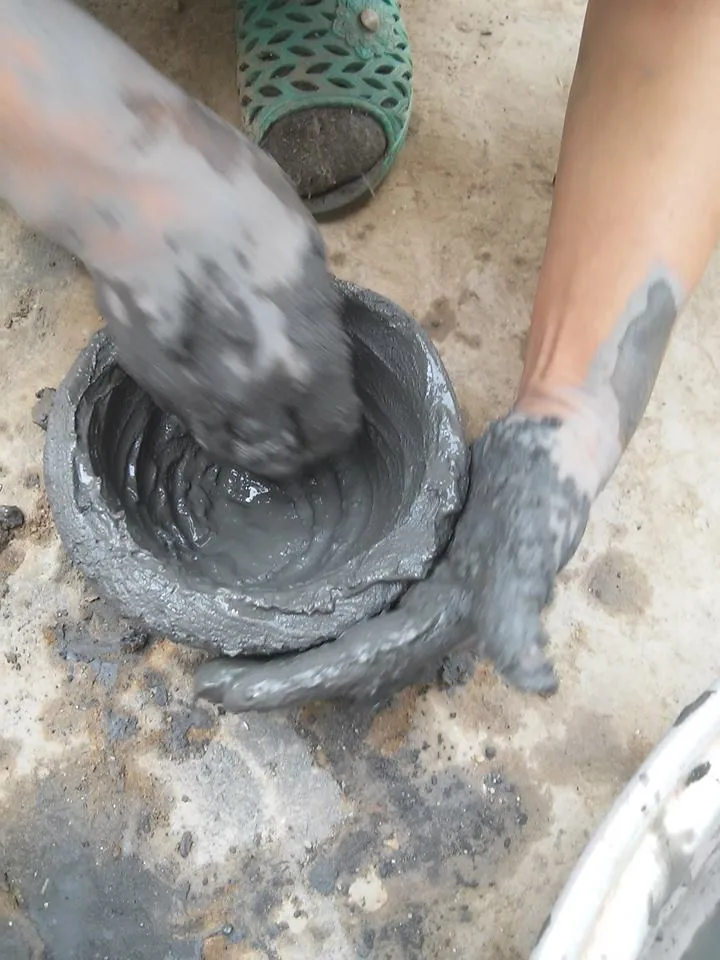
Hushnamo tells
Avj Gorge
We went to the gorge of Avj village. We were Pahlavon, Gulsher, Aziz, Amonbek, and me. We walked for five hours from Mulvoj to the Avj gorge. The gorge was beautiful: birds were singing everywhere, greenery was blooming, and flowers, many of which were medicinal, swayed in the wind. We reached the pasture where, according to the elders’ advice, clay should exist. Fortunately, we found it. Amonbek showed us the location of the clay. He described how, in the old days, his mother and other women made jugs, cups, and other necessary utensils from clay. At that time there were no porcelain or glass dishes; all dishes were molded from clay. However, this clay was used not only for domestic purposes but also for medicinal ones. The color of the clay was black.
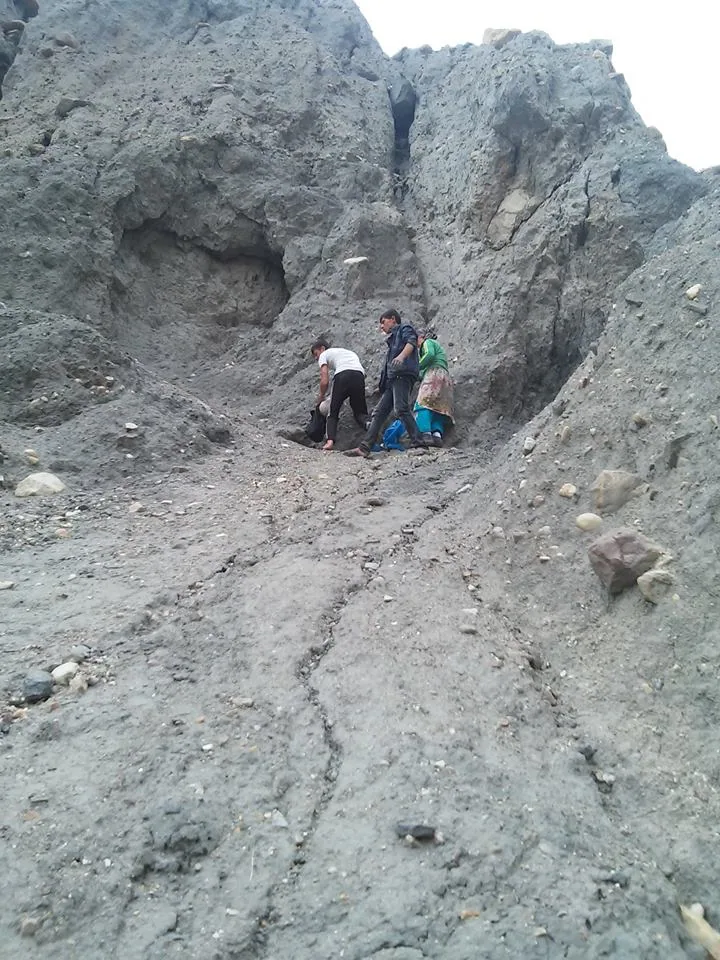
Garmchashma
Unique clay also exists in the Garmchashma mountains. It is light blue. When we discussed the clay found here with the elders, they said that all the clays could be used for pottery, but with different firing technologies. Dishes and other things should be fired for no less than twenty-four hours. They also said that clay was used for making large cauldrons, which were used to store milk or yogurt.
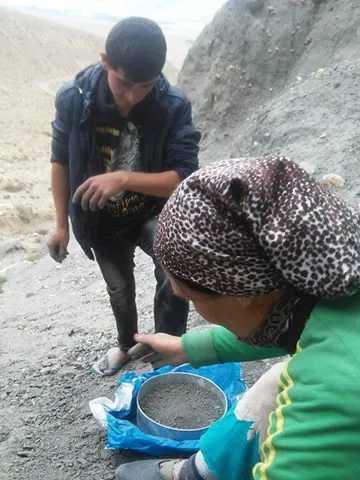
Gaghush
Fortunately, Gaghush also has special clay. I went there and understood this for myself. Old people of the village shared their knowledge and said that clay was used not only for making crockery but also for tandoors, large clay ovens needed for baking bread.
About pitcher sculpting
With Aunt Gulbegim we started modeling pitchers. Aunt Gulbegim had never made pitchers from clay, but she remembered how her mother had done it. First, we made dough from the clay. Then, using our imagination and without any template, we began to sculpt pitchers. Third, we proceeded to firing. In order to fire well, a pitcher needs to be fired for a long time. We placed our pitchers in the open countryside, surrounded them with dung, and burned them. We kept the fire from seven in the evening until morning. The next day, when we went to visit our creations, we understood that they were ready. Pulling them out of the fire, we smeared them with oil. Now they are dry and ready for use. Before firing, they were bluish and black, and now they have turned red.