
Names
Tajik: Ҷамбилак (ҷамилак, бодранҷбӯя, лалмипудина, пудинаи кӯҳӣ, пудинаи ҷабалӣ, мушки тарамшӣ)
Latin: Ziziphora pamiroalaica Juz.
Russian: Зизифора памироалайская
Ishkashimi: Ҷамбилак
Wakhi: Ҷамбилак
Shughni-Rushani: Ҷамбилак
Yazgulami: Ҷамбилак
English: Ziziphora
Description
Ziziphora is a perennial herbaceous plant belonging to the mint family (Labiateae) and includes various species: Ziziphora brevicalix — фаранҷмушк, Z. tenior L. — mountain mint, ҷамбилак ҳулбаи кӯҳӣ; Z. interrupta Juz. — қоқутӣ, ҷамбилак; Z. suffruticosa Pazi et Wed. — ҷамбилак қоқутӣ.
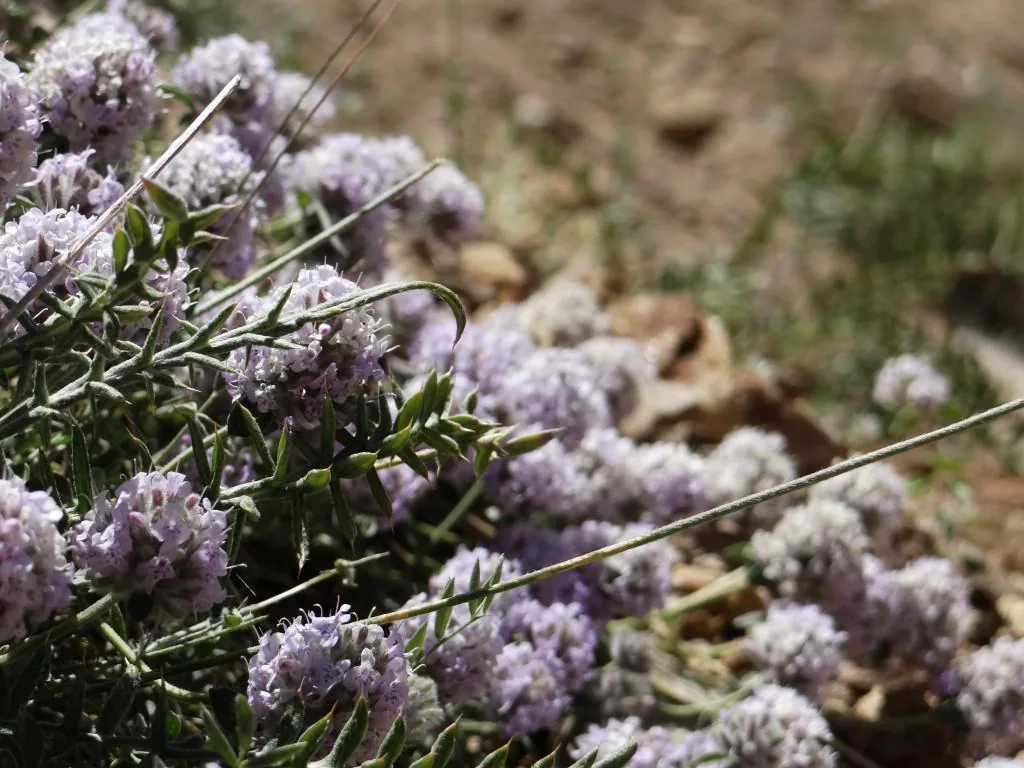
It is a many-stemmed semi-shrub, 10–25 cm tall, and in some places it spreads along the ground.
Its leaves are lance-shaped or egg-shaped, and it has small pink, white, or violet flowers.
Ziziphora has a very pleasant fragrance.
It grows throughout Badakhshan on slopes, foothills, ravines, and rocky places at elevations of 1,800–4,300 metres above sea level.
Because of its pleasant taste and fragrance, people of the Ishkashim district have composed rubai and verses about ziziphora, which folk performers sing at weddings and celebrations:
Go forth, flowers of jambylak,
Hurry forth, flowers of jambylak.
By your enchanting scent and taste,
I am captivated, flowers of jambylak.
Ziziphora flowers in June–July, and its seeds ripen in July–September.
Its nature is considered hot and dry in the third degree.
Parts used
The flowers, stems, and leaves of ziziphora are used in medicine.
The leaves, flowers, and stems are collected during flowering, spread in a layer 3–5 cm thick, and dried in a shaded, well-ventilated place.
The medicinal material is stored in paper boxes, glass containers, or ceramic vessels for up to 3 years.
Chemical composition
The above-ground part of ziziphora contains essential oil, menthol, carotene, glycosides, vitamin C, saponins, organic acids, resins, tannins, and other substances.
(Khaitov I. 2004; Khojimatov M. 1989; Navruzshoev et al. 1998).
Medicinal properties
Ziziphora is attributed diuretic, menstruation-stimulating, expectorant, diaphoretic, anthelmintic, appetite-stimulating, refreshing, calming, antidotal, and heart-strengthening properties.
Use in medicine
Since ancient times, ziziphora has been used by Hippocrates, Avicenna, and folk healers in the treatment of various diseases.
Avicenna used ziziphora for diseases of the stomach, liver, nervous system, and heart, for forgetfulness, wounds and sores, for removing the smell of garlic and wine, and as an anthelmintic.
In folk medicine, infusions, decoctions, and powdered ziziphora are widely used for diseases of the digestive organs — the stomach, intestines, and liver — to stimulate appetite and relieve nausea; for throat diseases in children; nervous disorders; strengthening heart function; high blood pressure; and as a diuretic, menstruation-stimulating, diaphoretic, and anthelmintic remedy.
Folk healers use ziziphora infusion with honey for scorpion stings and with vinegar and honey for bee stings.
Powdered ziziphora is taken with tea or water to relieve belching, as an expectorant for respiratory diseases, and for stomach and liver pain.
The amount of dried ziziphora for a single intake is 4.5 g.
Scientific studies are described as having found that ziziphora lowers arterial blood pressure, relieves pain in the heart area, improves general condition and sleep, and increases urination.
For this reason, it has been recommended for arterial hypertension, инъисоб, recovery after a heart attack, and digestive disorders such as stomach pain, nausea, and loss of appetite.
(Khojimatov M. 1989).
Ziziphora oil
Oil is prepared from ziziphora.
To prepare it, the required amount of fresh ziziphora is crushed and pressed. The juice is poured into a vessel and sesame is added in an amount equal to its weight.
The mixture is then boiled over low heat until the water evaporates. The resulting product is considered ziziphora oil.
The oil is used for headache, strengthening the brain, nasal congestion, strengthening the organs of the neck, and giving the body a pleasant fragrance.
(Zohidov H. 1991).
Medicinal forms, method of use, and dosage
Ziziphora herb infusion
20 g, or one tablespoon, of finely chopped dried herb is placed in an enamelled container and covered with 400 ml, or two glasses, of boiling water.
It is infused for 30 minutes.
The infusion is then strained and taken in an amount of one tablespoon 3–4 times a day before meals.
The duration of treatment is 3–4 weeks.
Warning
Information about medicinal properties, methods of use, and dosages on this page is based on the original text and partly belongs to traditional and folk medicine.
This information is provided for educational and informational purposes and should not be used as a guide to self-treatment.