
Names
Tajik: Бехи зардрӯй (бехти матк, бӯя, дори ширин, матк, сускаҳ, сускаҳак, хурди пилон, ширинбеҳ, ширинбӯя, ширинбаён, мия, суси ширин, ширинмия, ширинбия)
Latin: Glycyrrhiza glabra
Russian: Солодка голая (лакричник, лакрица, солодка гладкая, солодка обыкновенная, солодковый корень, сладкий корень, осолодка, солодец, солодика)
Arabic: Сус
Ishkashimi: Малыхч
Wakhi: Малтк
Shughni-Rushani: Мутк
Yazgulami: Мутн
English: Licorice
Description
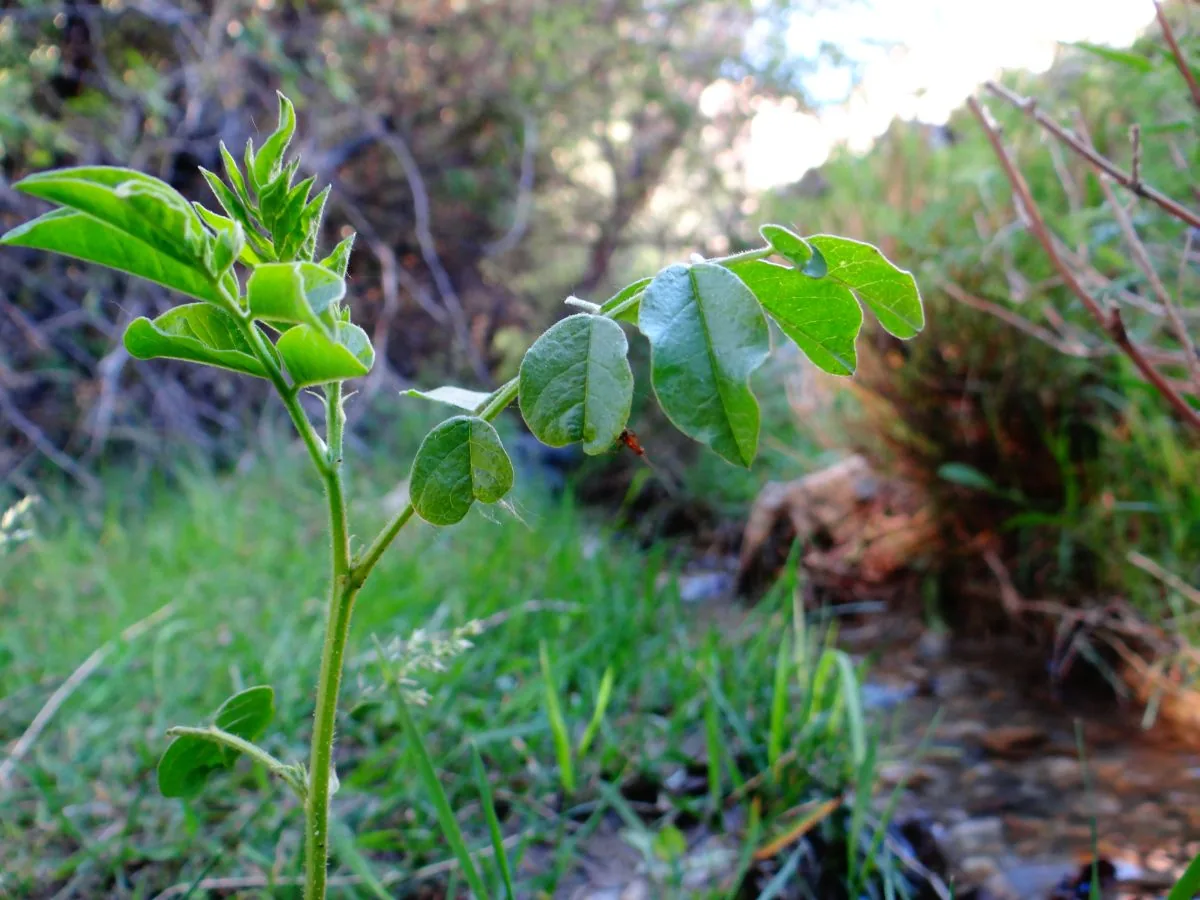
Licorice is a perennial herbaceous plant belonging to the legume family (Leguminosae).
It grows from 50 cm to 1.5 metres in height and may sometimes reach 2 metres.
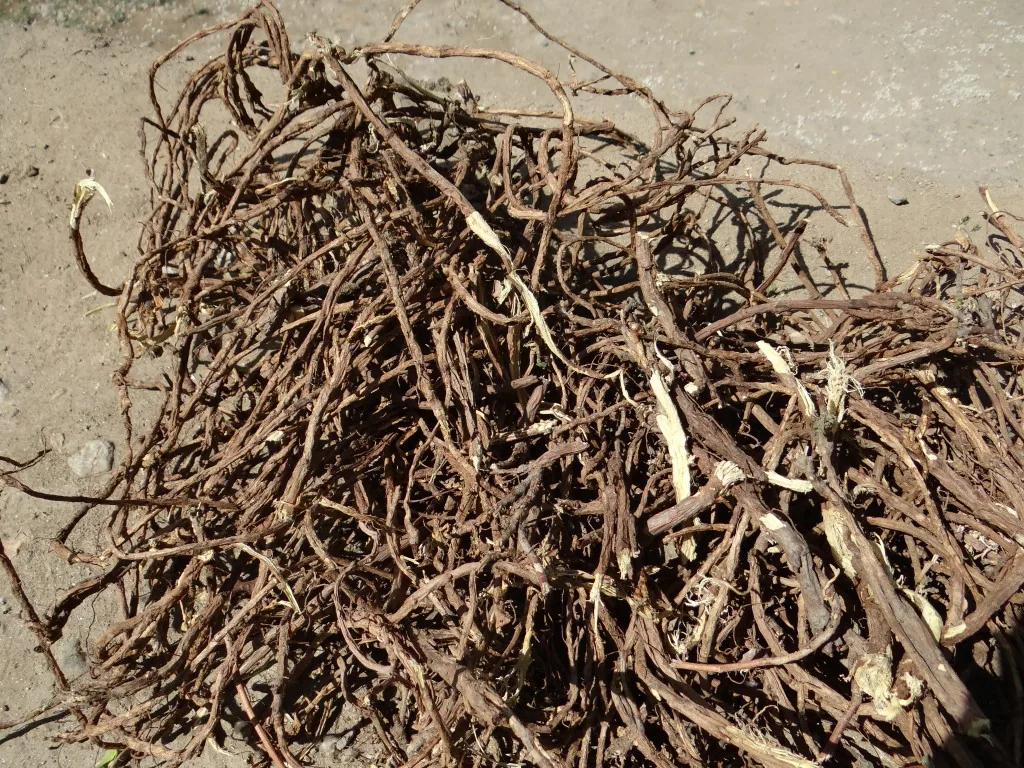
The plant has a strong taproot system that spreads widely in different directions.
According to observations, its roots may reach up to 5 metres in length.
The yellow root is covered with brown skin and has a sweet taste and a characteristic flavour.
Licorice has an upright, strongly branched stem.
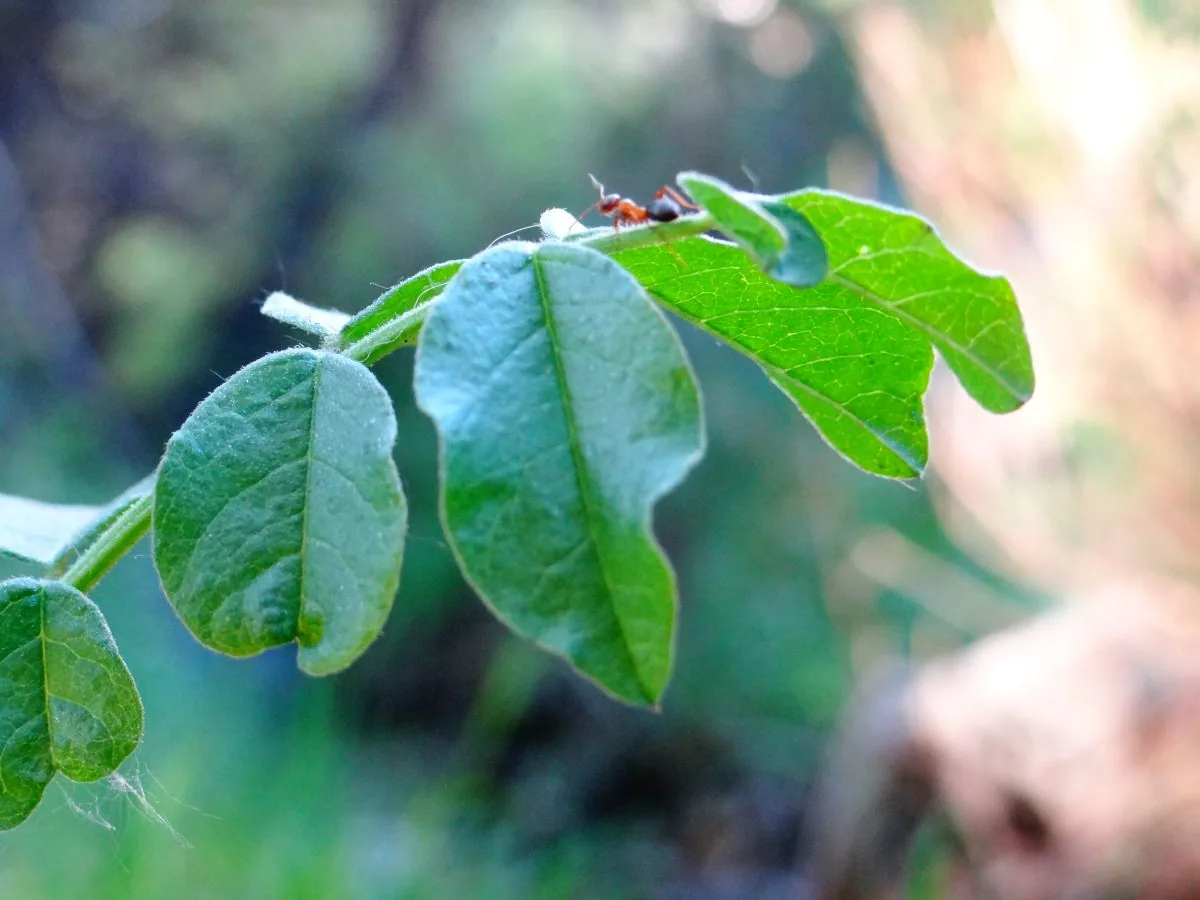
Its leaves are compound, pinnate, elongated, oval, and sticky.
The surface of the leaves is covered with glue-like substances that give them their sticky character and distinctive smell.
The flowers are whitish-violet, with a butterfly-shaped corolla.
The pod is long and may be straight or curved.
The seeds are small, round or kidney-shaped, and brown or brownish in colour.
Under the natural conditions of Badakhshan, licorice flowers in June–July, and its seeds ripen in August–September.
Licorice grows in all districts of Badakhshan except Murghab, along irrigation channels and rivers, on cultivated land, in gardens, vegetable plots, and ravines, at elevations of 1,800–3,000 metres above sea level.
Large areas of licorice growth in the republic are found in the basin of the Amu Darya and its tributaries, including the Kofarnihon and Panj rivers, as well as in Shurobod and the Jumma steppe.
During the Soviet period, licorice was collected and sent to Chardzhou, where industrial preparations were produced from it at a specialised licorice factory.
The nature of licorice is considered hot in the second degree and dry in the first degree.
Parts used
In folk and modern medicine, the roots and rhizomes of licorice are used for medicinal purposes.
Licorice root is also used in the food industry for the production of:
- beer;
- balsams;
- alcoholic beverages;
- Coca-Cola;
- Pepsi-Cola.
It is also used for:
- tanning leather;
- preparing dyes;
- flavouring cigarettes;
- use as nutritious livestock feed.
Licorice is harvested in October and November by ploughing the soil.
The material is washed in cold running water and cut into pieces 25–40 cm long.
It is then dried in the sun or in special dryers at a temperature of 40–60°C.
The dried material is stored in cardboard or paper boxes or in special bags for up to 10 years.
(Nuraliev Y. 1989).
Chemical composition
Licorice root contains:
- glycyrrhizic acid — 4–13%;
- flavonoids — 34%;
- steroids — 3.3%;
- saponins — 8%;
- essential oils — 0.03%;
- proteins — 6–10%;
- starch — up to 11%;
- fibre — 34%;
- glucose — 0.6–15%;
- sucrose — 0.3–11.0%;
- resinous substances — 1.75–4.12%;
- gum — 1.5–6.5%;
- bitter substances;
- tannins;
- salicylic acid;
- vitamin C;
- coumarins — up to 14%;
- alkaloids;
- organic acids — 4.6%;
- kaempferol;
- apigenin;
- quercetin;
- and other substances.
In addition, the roots and rhizomes contain the following macroelements:
- potassium;
- magnesium;
- calcium;
- iron.
The listed trace elements include:
- manganese;
- copper;
- zinc;
- aluminium;
- barium;
- vanadium;
- selenium;
- nickel;
- lead;
- boron;
- strontium.
(Khojimatov M. 1989; Nuraliev Y. 1989; Azonzod J. 2010; Muravyova D. A. 1991).
Medicinal properties
Licorice is attributed the following properties:
- anti-inflammatory;
- expectorant;
- antimicrobial;
- diuretic;
- laxative;
- antihistamine;
- pain-relieving;
- general strengthening;
- softening;
- wound-healing.
Use in medicine
Avicenna used licorice for diseases of the respiratory organs, kidneys, and bladder.
He wrote:
“…licorice cleanses and softens the airways and lungs, is useful for nokhunkhura and nokhuna, heals the lungs and spleen and clears the voice, relieves thirst, heals sores of the kidneys and bladder, and removes disorders of the stomach.”
Abumansur Muwaffaq wrote:
“…licorice relieves constipation and heat, cures old fevers and sores of the bladder and kidneys; if its juice is put into the eyes, it removes nokhuna, relieves burning urination, and eases childbirth. Licorice leaves remove underarm odour and sweating of the feet.”
Use in folk medicine
Folk healers use licorice powder, infusion, decoction, and dry extract for various conditions.
For respiratory conditions:
- inflammation of the respiratory passages;
- inflammation of the lungs;
- inflammation of the throat;
- bronchial asthma;
- whooping cough.
For digestive conditions:
- gastric ulcer;
- duodenal ulcer with increased gastric secretion;
- chronic inflammation of the stomach with increased secretion;
- acute inflammation of the stomach with increased secretion;
- as a mild laxative;
- constipation;
- inflammation of the gallbladder;
- poisoning.
For skin conditions:
- eczema;
- allergic inflammation of the skin;
- neurodermatitis.
For the genitourinary system, as an anti-inflammatory and diuretic preparation in:
- prostate adenoma;
- inflammation of the prostate gland;
- inflammation of the kidneys;
- inflammation of the bladder.
Licorice is also used for:
- headache;
- migraine;
- darkening of vision;
- nokhuna of the eye;
- colic;
- unpleasant underarm odour;
- unpleasant odour between the toes.
A single amount of peeled licorice root is given as 17.5 g.
Use in modern medicine
In modern medicine, galenic preparations of licorice are used for diseases of the respiratory system.
They are used as:
- expectorants;
- anti-inflammatory preparations;
- astringents;
- softening preparations.
Their use is especially mentioned in cases of thick sputum that is difficult to expel, including in children and older people, as well as in bronchial asthma.
Dry and thick licorice extracts are included in chest elixirs and chest mixtures.
Licorice root, in combination with other medicinal plants, is used in:
- diuretic teas;
- laxative teas;
- stomach teas;
- anti-haemorrhoidal teas;
- chest teas.
Licorice root and the preparation “Liquiriton” made from it are used for:
- gastric ulcer;
- duodenal ulcer;
- chronic inflammation of the stomach with increased secretion of gastric juice.
They are also used as anti-inflammatory and antispasmodic preparations.
Glycyram
The preparation “Glycyram” is produced on the basis of glycyrrhizic acid.
It is attributed the following properties:
- anti-inflammatory;
- antihistamine;
- antispasmodic.
The text mentions its use for:
- bronchial asthma;
- spasms of the respiratory passages;
- poisoning caused by medicines;
- food poisoning;
- mushroom poisoning;
- infectious inflammatory diseases;
- skin inflammation;
- eczema;
- seasonal eruptions;
- insufficiency of adrenal gland function;
- weakness;
- loss of strength;
- low blood pressure.
Use in medicine of different countries
Licorice root is used in many countries of the world for various conditions.
In the medicine of Bulgaria, Poland, France, Austria, China, and Tibet, licorice root is used for:
- respiratory diseases;
- digestive diseases;
- as a laxative;
- as a coating preparation;
- as a softening preparation;
- as an anti-haemorrhoidal preparation;
- as a diuretic;
- tuberculosis;
- diseases of the heart and blood vessels;
- rheumatism;
- gout;
- wound healing;
- pain relief;
- skin diseases.
(Kovaleva N. G. 1971).
Effects of prolonged use
Prolonged use of licorice preparations may lead to disturbances of water and salt metabolism, increased blood pressure, and the development of oedema.
Licorice preparations are not recommended during pregnancy or for people prone to diarrhoea.
Medicinal forms, method of use, and dosage
Licorice root decoction
10 g, or two teaspoons of the material, are placed in a covered enamelled container and covered with 200 ml, or one glass, of boiling water.
The mixture is boiled in a water bath or over low heat for 20 minutes.
It is then cooled at room temperature for 45 minutes.
After straining through gauze, the volume of the decoction is restored to the original amount.
It is taken daily in an amount of one tablespoon 3–4 times a day before meals.
The decoction is used for inflammatory diseases of the respiratory system as an expectorant.
Licorice root decoction for prostate adenoma and inflammation
10 g, or two teaspoons of the material, are placed in an enamelled container and covered with 0.5 litres of water.
The mixture is boiled over low heat or in a water bath for 10 minutes.
After cooling and straining, it is taken in an amount of 3/4 of a glass 3 times a day before meals.
The treatment course lasts 3 weeks.
After a 2-week break, repetition of the treatment is mentioned.
The text recommends 5–6 such treatment courses during a year.
Pharmaceutical preparations
Glycyram
“Glycyram” is produced in doses of 0.05–0.1.
It is taken in an amount of 0.1 g 2–4 times a day, 30 minutes before meals.
The duration of treatment depends on the course of the disease, the condition of the patient, and the treatment result.
Liquiriton
“Liquiriton” is produced in a dose of 0.1.
It is taken in an amount of 0.1–0.2 g 3–4 times a day, 30 minutes before meals.
The preparation is used for gastric ulcer, chronic inflammation of the stomach, and erosive lesions of the stomach.
Chest elixir
Chest elixir is taken in an amount of 20–40 drops 3–4 times a day as an expectorant.
Thick licorice root extract
Thick licorice root extract is used for preparing pills.
(Sokolov S. Y. 2000; Kurennov I. 2008).
Warning
Information about medicinal properties, methods of use, and dosages on this page comes from the source text and partly belongs to folk and traditional medicine.
The text mentions the use of licorice for diseases of the respiratory system, cardiovascular system, kidneys, prostate gland, and other serious health conditions.
Prolonged use of licorice preparations is associated in the text with increased blood pressure, oedema, and disturbances of water and salt metabolism.
The information is provided for educational and informational purposes and should not be used as a guide to self-treatment.