
Names
Tajik: Гулхор (хуч, хор, садбарг, настарин, настаран, хоргул, гули раҳно, настор, гули мушкин)
Latin: Rosa huntica Chreshan
Russian: Шиповник гунский
Arabic: Настаран
Ishkashimi: Кикик
Wakhi: Чрирғлой, чрир
Shughni-Rushani: Хъар, роштхъар, ахар
Yazgulami: Глхер
English: Bog rose
Description
There are 350–400 species of rosehip growing in nature.
Rosehip belongs to the rose family (Rosaceae).
Eighteen species grow within the territory of Tajikistan.
Botanist K. V. Stanyukovich was the first to study rosehip in Badakhshan, in the Gunt Valley, and included it in botanical descriptions.
In Badakhshan, besides Gunt rosehip, various other species occur, including Fedchenko, Maximowicz, and Begger rosehips.
Gunt rosehip is a perennial thorny shrub reaching 2–3 metres in height.
Its stems, branches, and shoots are covered with straight or curved thorns.
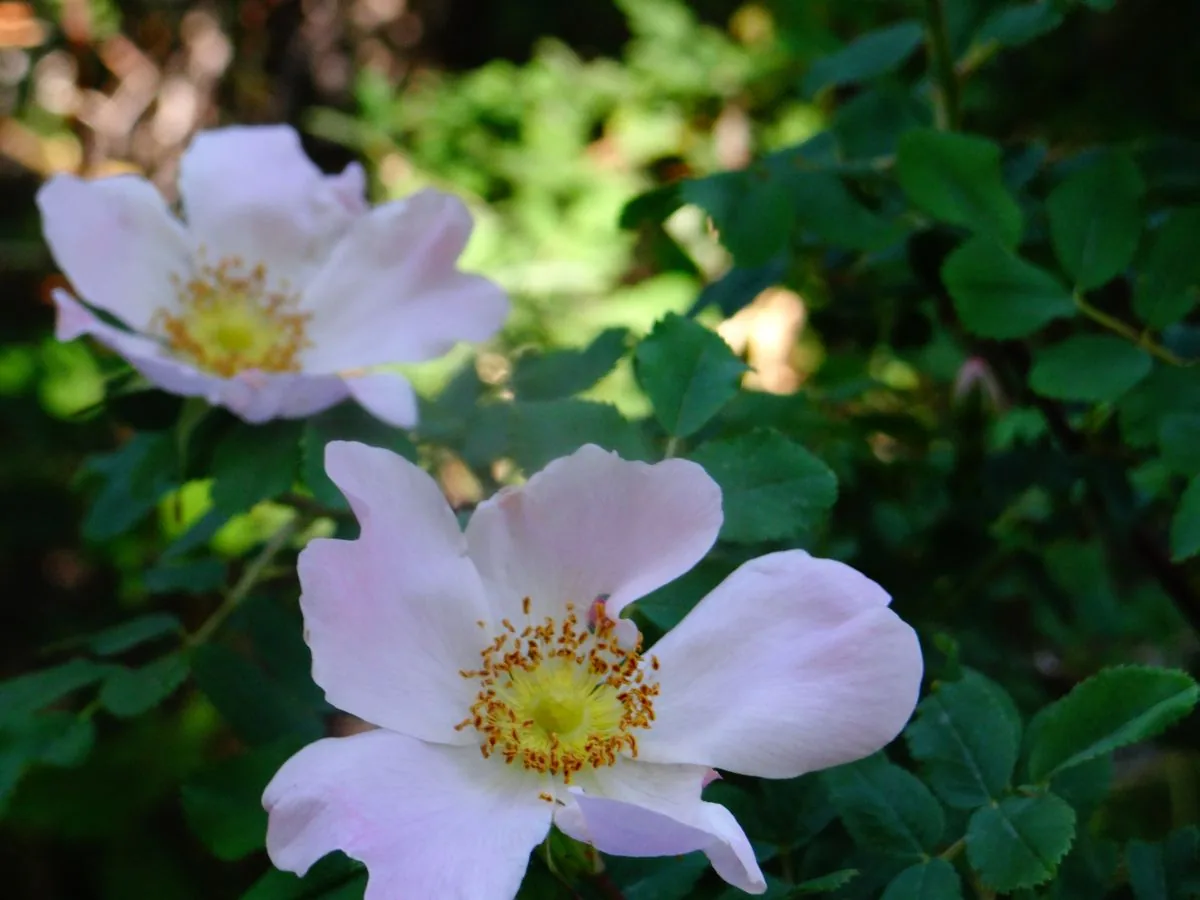
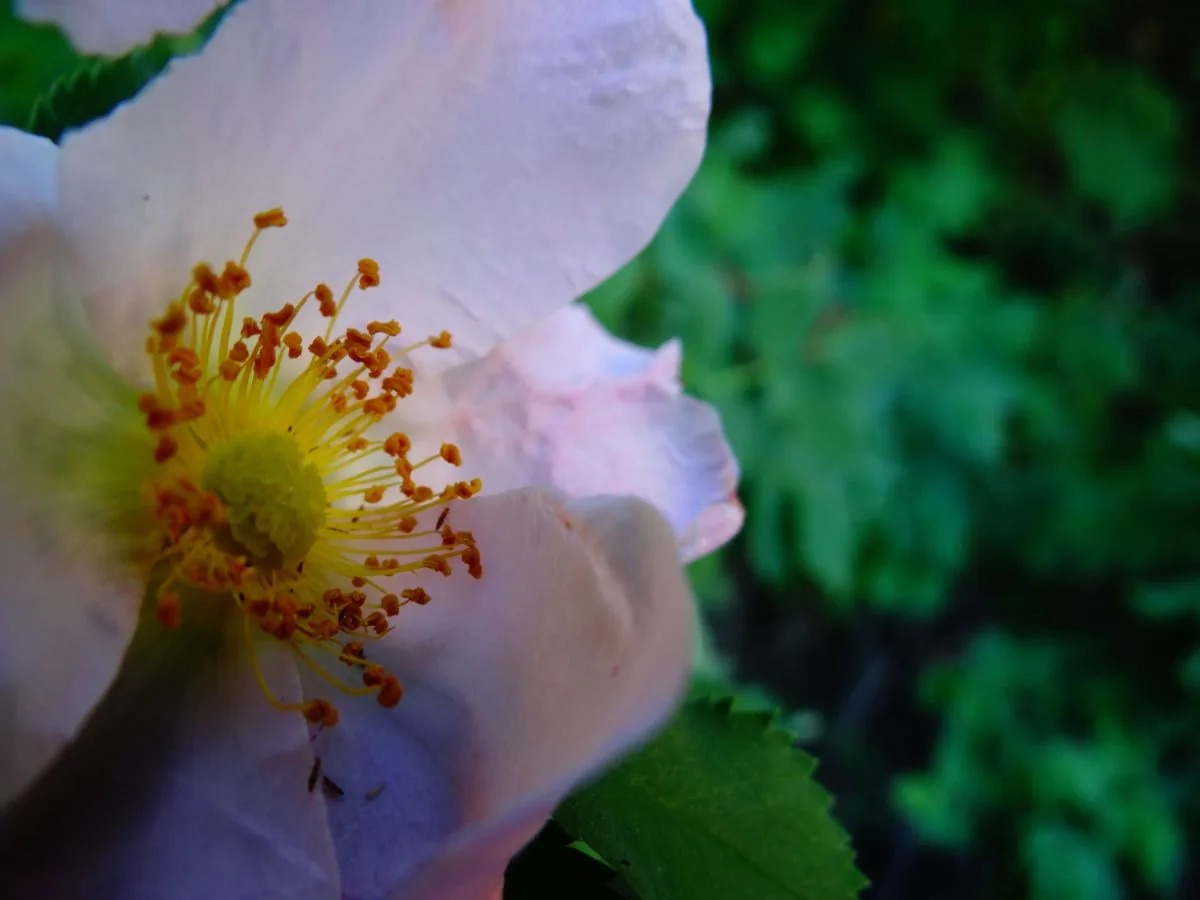
The leaves are pinnate, while the flowers may be white, pink, or brownish.
In Badakhshan, rosehip grows in all districts except Murghab, in wooded areas, along waterways and irrigation channels, in ravines and depressions, at elevations of 1,300–3,600 metres above sea level.
Rosehip flowers in June–July, and its fruits ripen in September–October.
Collection and storage
Rosehip flowers and leaves are collected during flowering.
They are dried outdoors in the shade and then stored in glass containers in a dark place.
The storage period for flowers and leaves is 2 years.
Under the conditions of Badakhshan, rosehip fruits are collected in October–November after they have fully ripened, when they become bright red and soft.
Rosehip roots are dug up in late autumn or early spring using a pick and shovel.
They are shaken free of soil, washed in cold running water, and dried outdoors in sunlight.
Rosehip fruits are dried in a stove, oven, or special dryer at a temperature of 80–90°C.
It is stated that 10 kg of fresh rosehip fruits yield 3–3.5 kg of dried material.
The dried material is stored in paper or wooden boxes or in bags for 2–3 years.
(Pokrovsky B. 2005).
Avicenna considered the nature of rosehip fruits to be hot and dry in the second degree.
Parts used
For medicinal purposes, the following parts of rosehip are used:
- fruits;
- leaves;
- flowers;
- seeds;
- roots;
- rootlets.
Chemical composition
Gunt rosehip contains:
- vitamins C, B, B2, K, P, E, and PP;
- carotene;
- organic acids;
- essential and fatty oils;
- sugars;
- flavonoids;
- phytoncides;
- proteins;
- tannins;
- colouring substances.
Vitamin C content in different parts of the plant is given as follows:
- fruit pulp — 5.1 mg%;
- sepals — 0.5%;
- fruit stalk — 1.9%;
- petals — 1.4%;
- leaves — 2.2%;
- branches — 2.2%.
In addition, Gunt rosehip contains the following macroelements:
- K;
- Mg;
- Ca.
The listed trace elements include:
- Mn;
- P;
- Fe;
- Cu.
Compared with other rosehip species, Gunt rosehip fruits are described as having a particularly high content of vitamin C and carotene.
The fruits of Gunt rosehip are reported to contain 11–13% vitamin C in the Darvoz Range, 10% in Rushon, 12–13% in Shughnon, and 0.06% carotene.
(Navruzshoev D. et al. 1998; Khojimatov M. 1989; Mamadrizokhonov A. 1998).
Medicinal properties
Gunt rosehip is attributed the following properties:
- anti-inflammatory;
- anti-atherosclerotic;
- diaphoretic;
- choleretic;
- antimicrobial;
- general strengthening;
- haemostatic;
- astringent;
- diuretic.
In addition, Gunt rosehip is considered to help normalise metabolism and improve digestion.
It is also attributed the ability to lower blood sugar and strengthen the body’s immune defences.
Avicenna wrote that rosehip cleanses and softens the body.
Use in medicine
In the book “The Canon of Medicine”, Avicenna mentioned rosehip in connection with:
- ringing in the ears;
- headache;
- toothache;
- pain in the nose;
- sore throat;
- pain in the tonsils;
- vomiting;
- hiccups.
Use in folk medicine
In folk medicine, infusions and decoctions of rosehip fruits, leaves, flowers, and roots are used for:
- heart diseases;
- high blood pressure;
- inflammation of the stomach and intestines;
- liver diseases;
- gallbladder diseases;
- inflammation of the oral mucosa;
- dental diseases;
- anaemia;
- kidney stones;
- infectious diseases;
- gout;
- rheumatism;
- weakness;
- wasting.
(Azonzod J. 2010).
Use in modern medicine
In modern medicine, preparations made from rosehip — infusions, decoctions, and pharmaceutical products — are used for various conditions.
Among cardiovascular conditions, the text mentions:
- atherosclerosis and arterial blockage;
- high arterial blood pressure;
- elevated blood cholesterol;
- ischaemic heart disease.
For digestive conditions, the following are mentioned:
- ulcers of the stomach and intestines;
- inflammation of the stomach and intestines;
- liver diseases;
- gallbladder diseases.
The text also mentions use for:
- diseases of the reproductive organs;
- inflammation of the kidneys;
- inflammation of the bladder;
- gynaecological conditions.
For skin conditions, the following are mentioned:
- eczema;
- seasonal eruptions;
- dermatoses.
For disorders of the musculoskeletal system, the following are mentioned:
- bone fractures;
- rheumatism of the joints;
- rheumatic conditions.
Rosehip oil is also used for trophic ulcers, cracked skin, cracked and sore nipples, and other conditions.
(Azonzod J. 2010; Nuraliev Y. 1989; Pokrovsky B. 2005; Navruzshoev D. et al. 1998; Khojimatov M. 1989).
Medicinal forms, method of use, and dosage
Medicinal parts of rosehip are used both separately and in combination with many other medicinal plants in folk and modern medicine.
Rosehip fruit infusion
10 g, or one dessert spoon of rosehip fruits, are placed in an enamelled container and covered with 200 ml, or one glass, of boiling water.
The mixture is heated in boiling water for 10 minutes.
After cooling, it is strained through 2–3 layers of gauze.
It is taken daily in an amount of 0.5 glass 3 times a day, half an hour before meals.
The infusion is used for:
- ulcers and inflammation of the stomach and intestines;
- gallbladder diseases;
- kidney stones;
- vitamin deficiency.
Rosehip root decoction
20 g, or one tablespoon of rosehip root, are placed in an enamelled container and covered with 400 ml, or two glasses, of hot water.
The mixture is boiled over low heat for 10–15 minutes.
After cooling for 45 minutes, it is strained through 2–3 layers of gauze.
The volume of the decoction is restored to its original amount.
It is taken daily in an amount of 2 tablespoons 3–4 times a day, half an hour before meals.
This decoction is used for kidney stones.
Pharmaceutical preparations
Holosas
In the pharmaceutical industry, the preparation “Holosas” is produced from rosehip fruits in 250 ml bottles.
It is used for inflammation of the liver and as a choleretic preparation in an amount of one teaspoon 3 times a day.
Rosehip oil
Rosehip oil has a characteristic smell and a brownish colour.
It is produced in 100 ml and 250 ml bottles.
Rosehip oil is used for:
- trophic ulcers;
- cracked skin;
- cracked and sore nipples;
- ulcers of the large intestine.
Carotolin
Carotolin is produced in 100 ml bottles.
It is used for:
- trophic ulcers;
- inflammation of the oral mucosa.
Warning
Information about medicinal properties, methods of use, and dosages on this page comes from the source text and partly belongs to folk and traditional medicine.
The text mentions the use of rosehip for cardiovascular diseases, high blood pressure, kidney diseases, gynaecological conditions, and other serious health problems.
The information is provided for educational and informational purposes and should not be used as a guide to self-treatment.