
Names
Tajik: Бобуна (бобунаҷ, бобунаи бӯйё, гули бобуна)
Latin: Matericaria chamomilla L.
Russian: Ромашка лекарственная (аптечная, ободранная)
Arabic: Бобунаҷ
Ishkashimi: Зардгылык
Wakhi: Ширвиш, ширвишн
Shughni-Rushani: Кухъчивир
English: Horse Gowan
Description
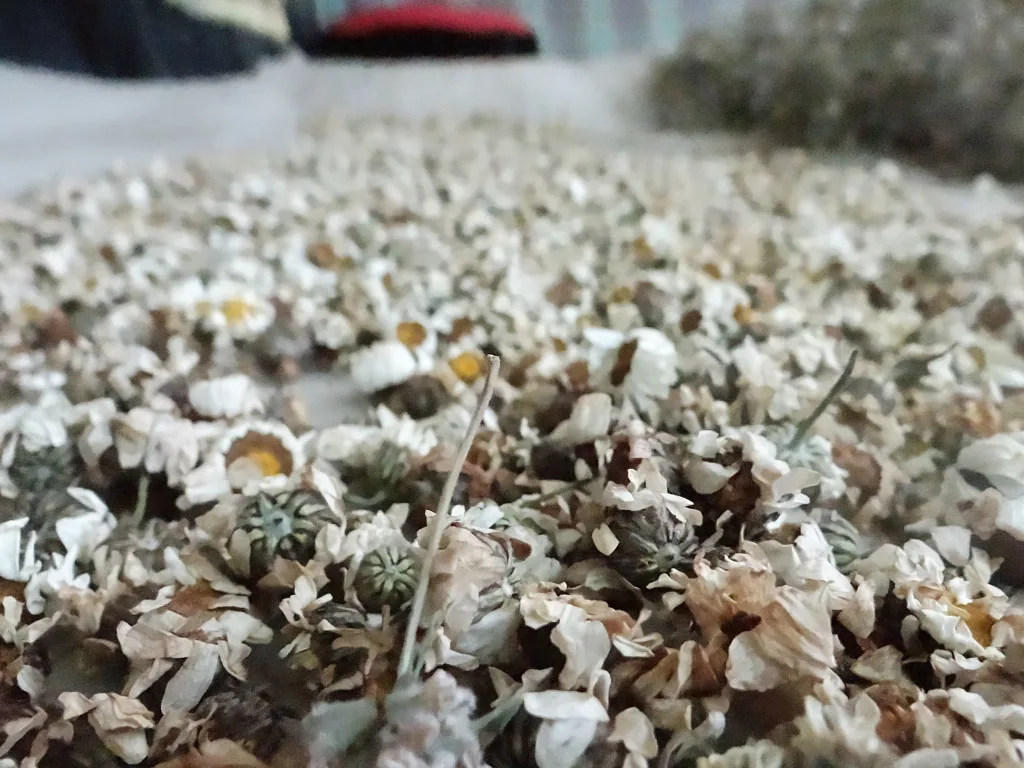
Chamomile is a herbaceous plant belonging to the Compositae family.
It is described as a perennial plant reaching approximately 50–100 cm in height.
The leaves are arranged alternately and are twice or three times pinnately divided.
The flowers are gathered into flower heads. The outer flowers are white and ray-shaped, while the inner flowers are tubular.
Chamomile grows in the districts of Badakhshan, in vegetable gardens, orchards, among shrubs, and in other open areas.
This type of chamomile is described as having no pronounced smell or taste.
Avicenna considered the nature of chamomile to be hot and dry in the first degree.
Abumansur Muwaffaq described it as hot and dry in the second degree.
H. Zohidov considered it hot in the second degree and dry in the first degree.

Parts used
The flower heads of chamomile are used for medicinal purposes.
They are collected during the flowering period, when the white ray flowers take a horizontal position.
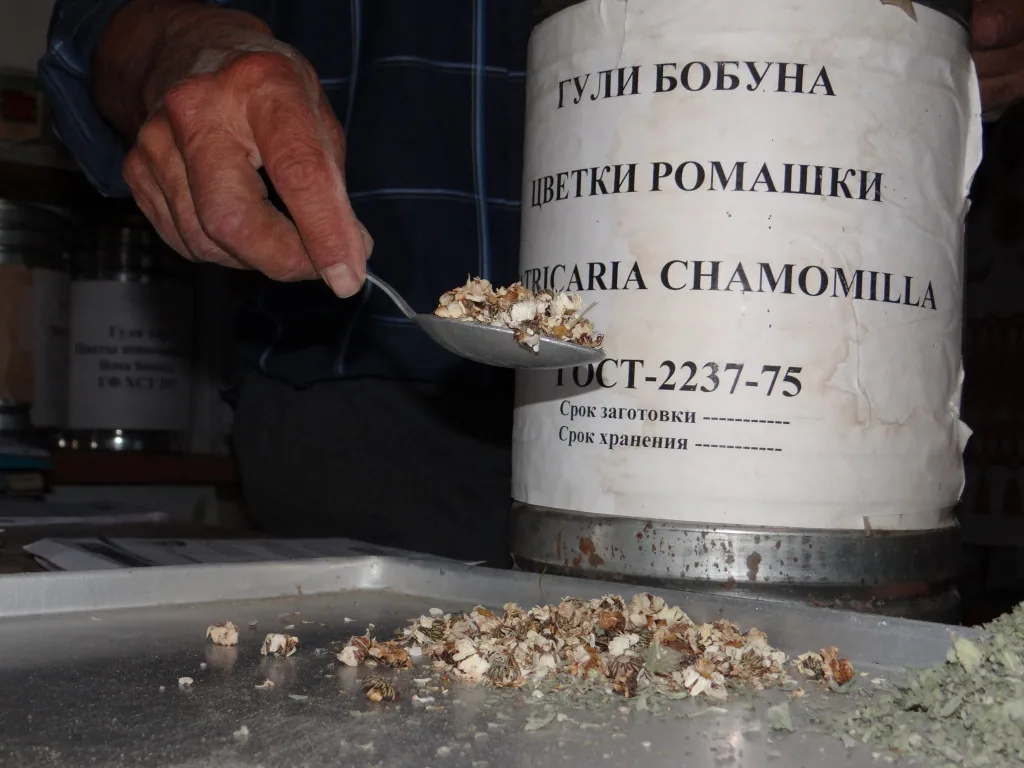
The collected flower heads are dried under shelters, in attics, or in other shaded and well-ventilated places.
The dried medicinal material is stored in cardboard boxes or paper bags.
The storage period is up to one year.
Chemical composition
Chamomile flower heads contain:
- essential oil — approximately 0.1–0.8%;
- chamazulene;
- bisabolol;
- flavonoids, including apigenin, quercetin, and isorhamnetin;
- coumarins, including umbelliferone and herniarin;
- phytosterols;
- choline;
- organic acids;
- vitamin C;
- carotene;
- mucilaginous substances.
The listed macronutrients include:
- K;
- Ca;
- Mg;
- Fe.
The listed trace elements include:
- Mn;
- Zn;
- Cu;
- Co;
- Al;
- Ba;
- V;
- Se;
- Ni;
- Sr;
- Pb;
- Ir.
This section refers to the work of V. G. Kukes (1999).
Medicinal properties
Chamomile flower heads are attributed the following properties:
- haemostatic;
- antiseptic;
- anti-inflammatory;
- pain-relieving;
- calming;
- diaphoretic;
- choleretic;
- anticonvulsant.
Chamomile is also attributed effects on respiration and heart activity.
Effects associated with dilation of blood vessels in the brain, stimulation of appetite, and gastric and duodenal ulcers are also mentioned.
Use in medicine
Chamomile is used both on its own and in combination with other medicinal plants.
Both internal and external forms of use are described.
In connection with disorders of the digestive system, chamomile has been used for:
- inflammation of the stomach;
- gastric ulcers;
- duodenal ulcers;
- inflammation of the liver;
- inflammation of the gallbladder;
- disorders of the pancreas;
- inflammation of the large and small intestines.
It has also been used in connection with some gynaecological conditions:
- absence of menstruation;
- painful menstruation;
- uterine bleeding;
- uterine tumours.
Chamomile is also mentioned in connection with some disorders of the nervous system:
- neuroses;
- epilepsy;
- neuritis;
- neuralgia.
It has also been used in connection with chronic inflammation of the prostate gland.
External use
Chamomile is used externally in connection with some inflammatory conditions of the gums, throat, and tissues surrounding the teeth.
Rinses and gargles are used for this purpose.
Chamomile micro-enemas have also been used in connection with haemorrhoids and inflammation of the rectum.
Washing preparations have been used in connection with some inflammatory conditions of the vagina and cervix.
Chamomile has also been used in connection with:
- gout;
- rheumatic joint conditions;
- softening the skin;
- excessive foot sweating;
- diathesis in children;
- itching of the skin;
- hair washing and care;
- certain skin conditions.
Use in ancient medicine
Avicenna used chamomile in connection with a number of diseases and conditions.
These included:
- hard swellings;
- headache;
- certain diseases of the brain;
- eye diseases;
- disorders of the chest;
- kidney stones;
- stimulation of menstruation.
Ancient medical sources also mention the use of chamomile in connection with expulsion of the foetus and placenta.
These statements are historical and should not be interpreted as medical advice.
Information from Abumansur Muwaffaq
Abumansur Muwaffaq recommended chamomile in connection with:
- joint diseases;
- absence of menstruation;
- difficulty urinating;
- kidney and bladder stones;
- lack of appetite;
- uterine tumours;
- strengthening of the nervous system and brain.
Medicinal forms, preparation, and dosage
One traditional preparation of chamomile is a decoction made from its flowers.
Chamomile flower decoction
10 g, or approximately one dessert spoon of chamomile flowers, are placed in a covered enamelled container and mixed with 200 ml of boiling water.
The plant material is infused for approximately 30 minutes.
It is then heated in a water bath for about 10 minutes.
Afterwards, it is cooled for approximately 15 minutes.
The decoction is strained through 2–3 layers of gauze.
The remaining plant material is pressed, and the total volume of liquid is restored to 200 ml.
The prepared decoction may be stored in a refrigerator for up to three days.
The stated amount for consumption is approximately 1/2–1/3 of a glass 2–3 times after meals.
Chamomile decoction has been used both internally and externally.
Forms of use include:
- enemas;
- gargles;
- rinses;
- baths.
Pharmaceutical preparations
Chamomile is also produced for medical use in packages of 100 g.
Several pharmaceutical preparations made with chamomile are mentioned, including:
- “Romazulan”;
- “Alorom” liniment;
- “Rotokan”.
These preparations have been used in connection with certain disorders of the stomach and intestines, flatulence, dental practice, pain associated with inflammatory joint conditions, and prevention of pressure sores.
Warning
Some of the uses described on this page belong to traditional medicine and historical medical sources.
Certain statements concern menstruation, pregnancy, and gynaecological use and should not be interpreted as direct medical recommendations.
The information on this page is provided for educational, historical, and informational purposes.
During pregnancy, in the presence of chronic illness, or when considering chamomile for medicinal purposes, consultation with a qualified medical professional is necessary.