
The volunteers school continues its work on the same scale and with the same enthusiasm (if not more).
Navruz is not only a holiday when, taking the opportunity, one can visit close people, eat delicious food, and dance. Navruz is like the beginning of a new period in life, an “opening of a new page”. It is a time when one can accomplish something long planned, whether it is a general cleaning of an apartment or a parachute jump. Perhaps this is connected with the beautiful (although rather rainy) spring — greenery everywhere, flowers, singing birds… Many people prepare for this holiday in advance because it is a good reason to renew their home, wardrobe, work (if not the position, then the quality), and creative people are visited by inspiration during these days. Thus, the musical instrument master Ustod Masayn from Anderob worked hard throughout the winter: preparing logs, soaking them, carving the shapes of future instruments, drying them, and so on, in order to present new instruments of intricate shapes and sizes in spring.
This story is about how the master and his faithful pupils made tablaks and rubabs.
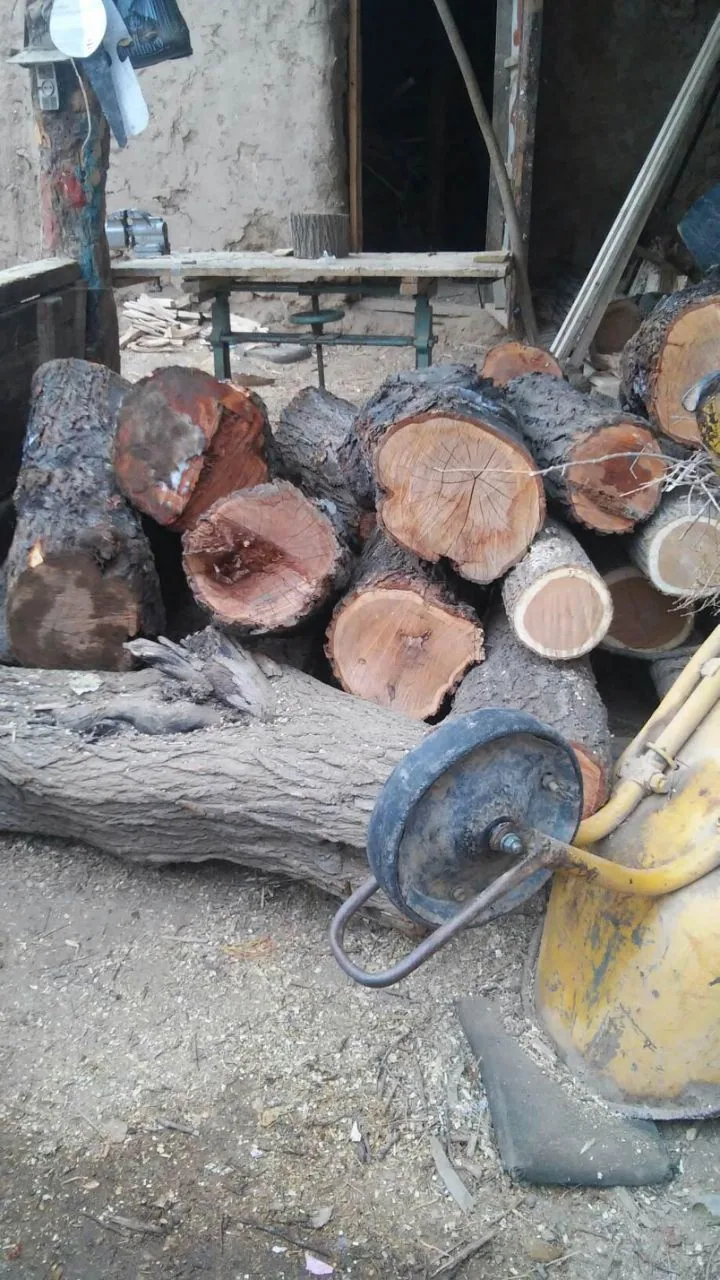
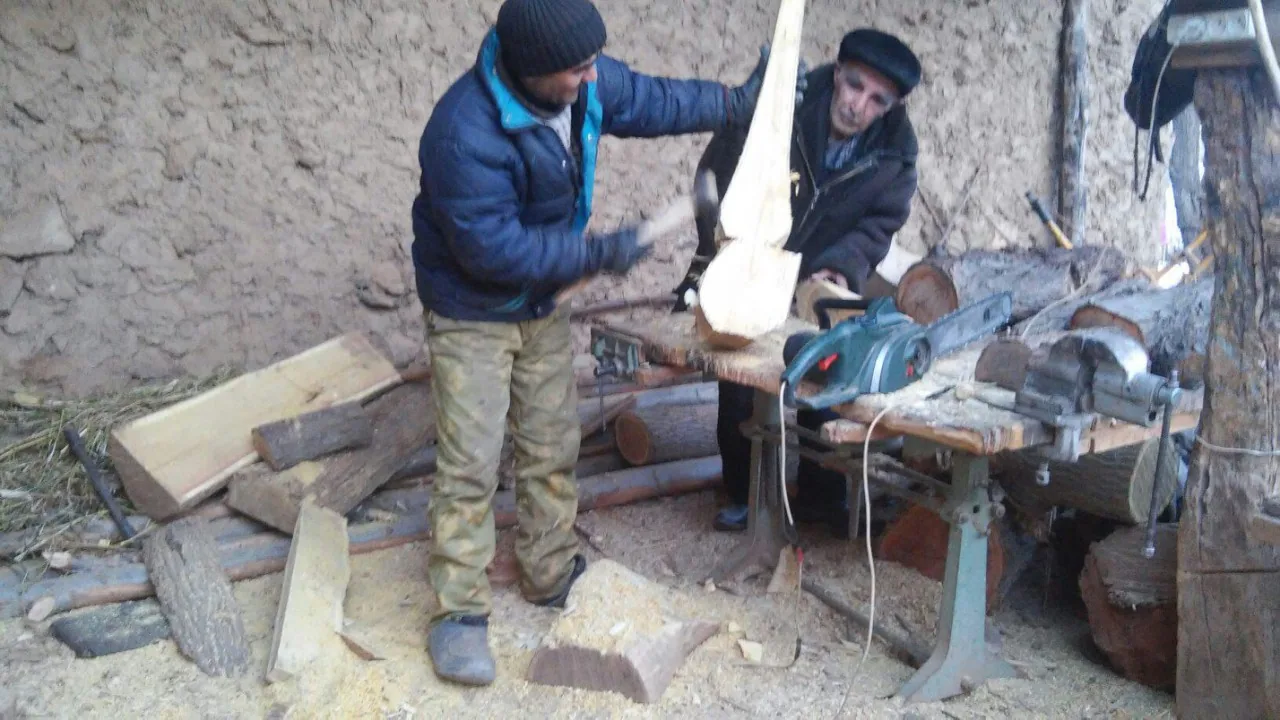
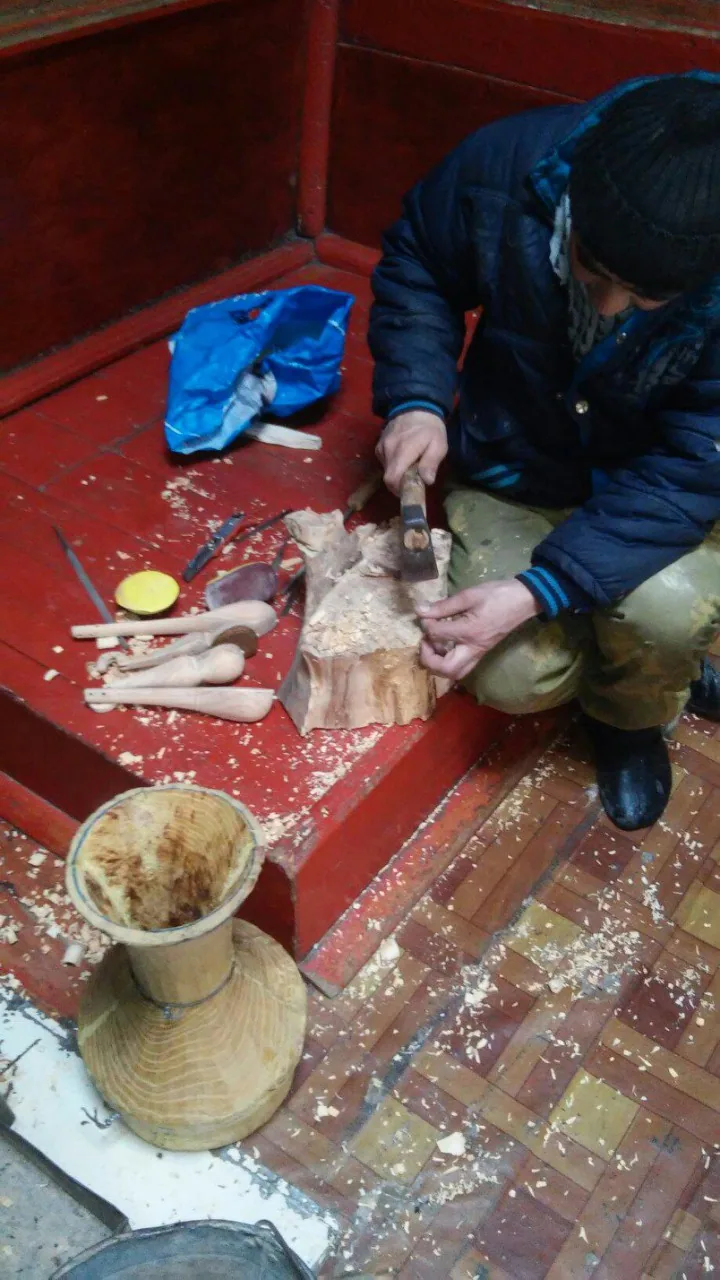
These are logs of mulberry and apricot wood intended for making instruments. Then considerable force is applied to them — the shapes of the instruments are carved out of the wood. At the moment, Ustod Masayn and his son are carving an ancient Badakhshan rubab called Tanbur.
 1 / 2
1 / 2While the master works on the rubab, his son has switched to the tablak: he carved it, “divided” it into two parts, hollowed out the middle, and is already gluing the two halves of the instrument together. The tablak is made from mulberry wood.
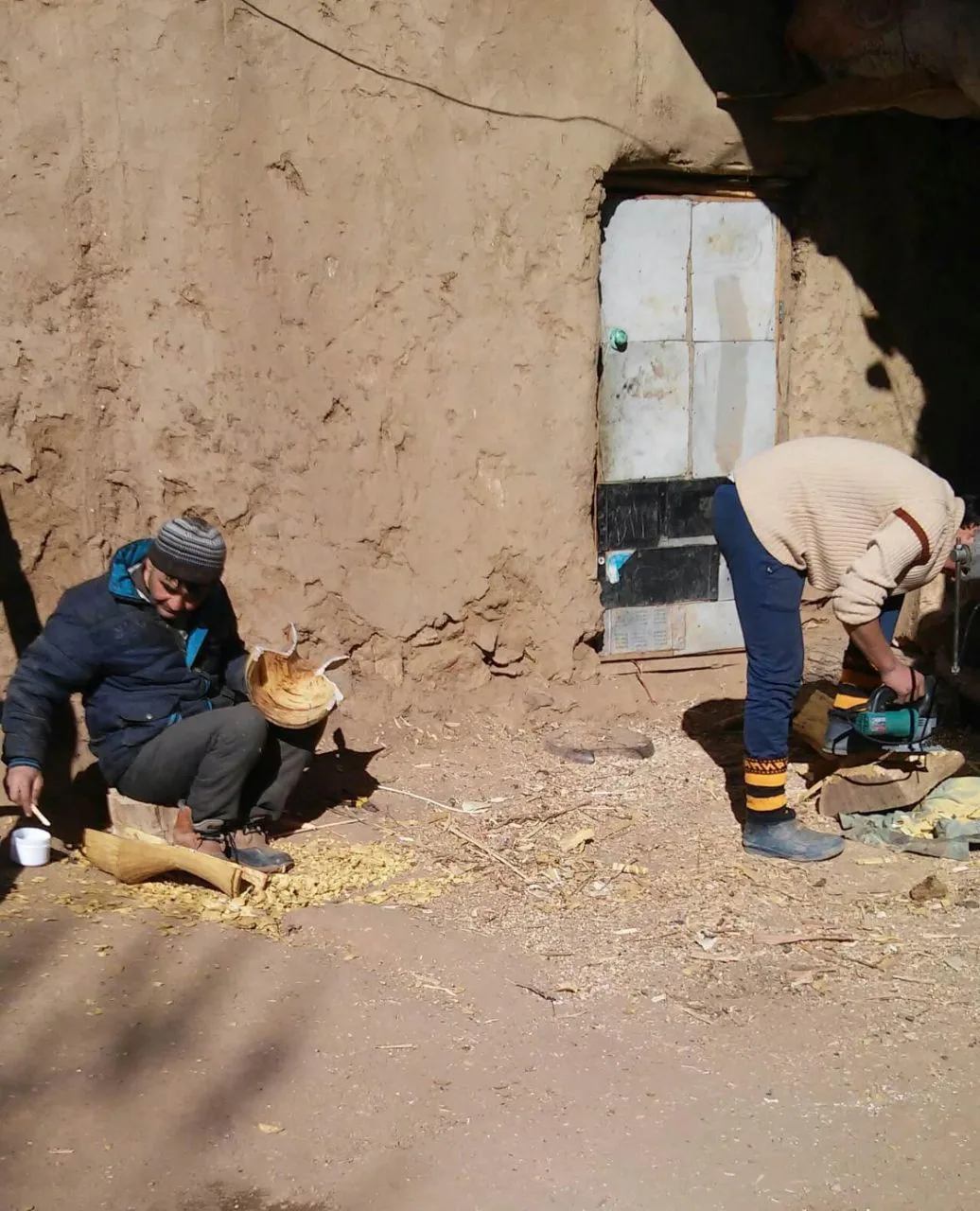
Now it is possible to start making souvenirs. The pupil cuts a template of the future instrument from paper, which will serve as a stencil. The pupil uses ancient Badakhshan forms or invents new ones.
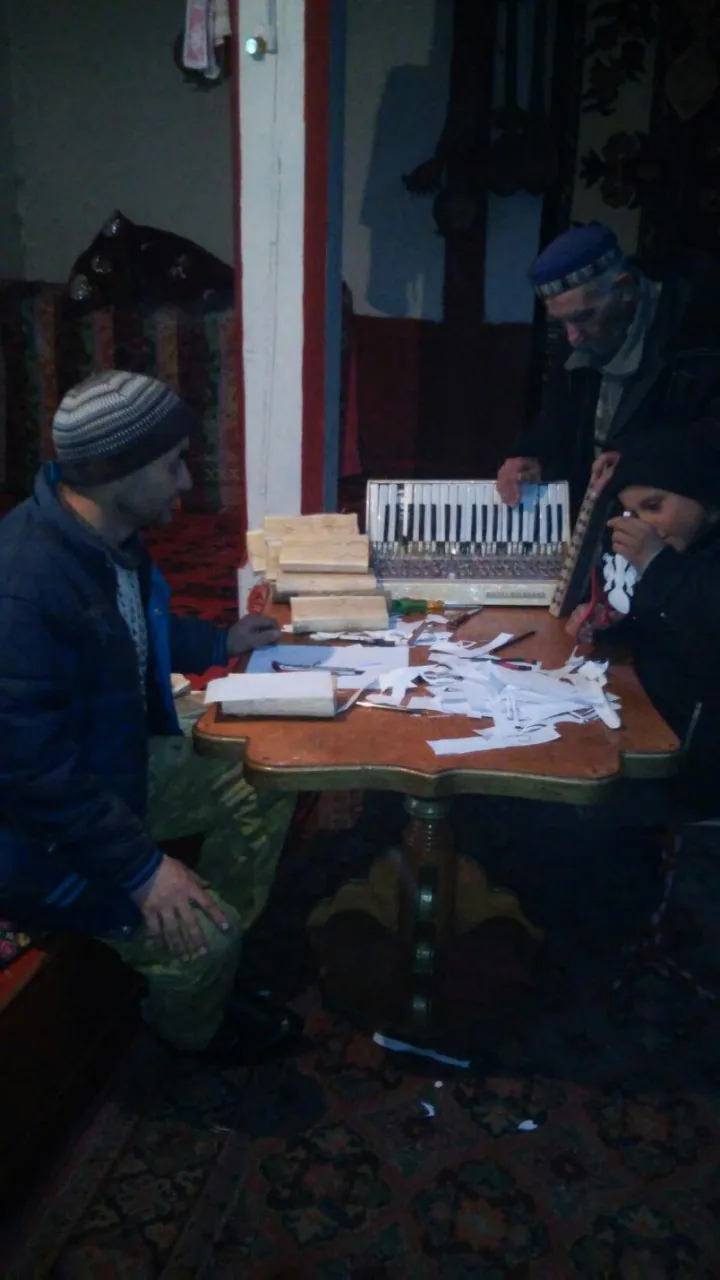
Then a model of the future instrument is drawn on the prepared material, placing the template against it.
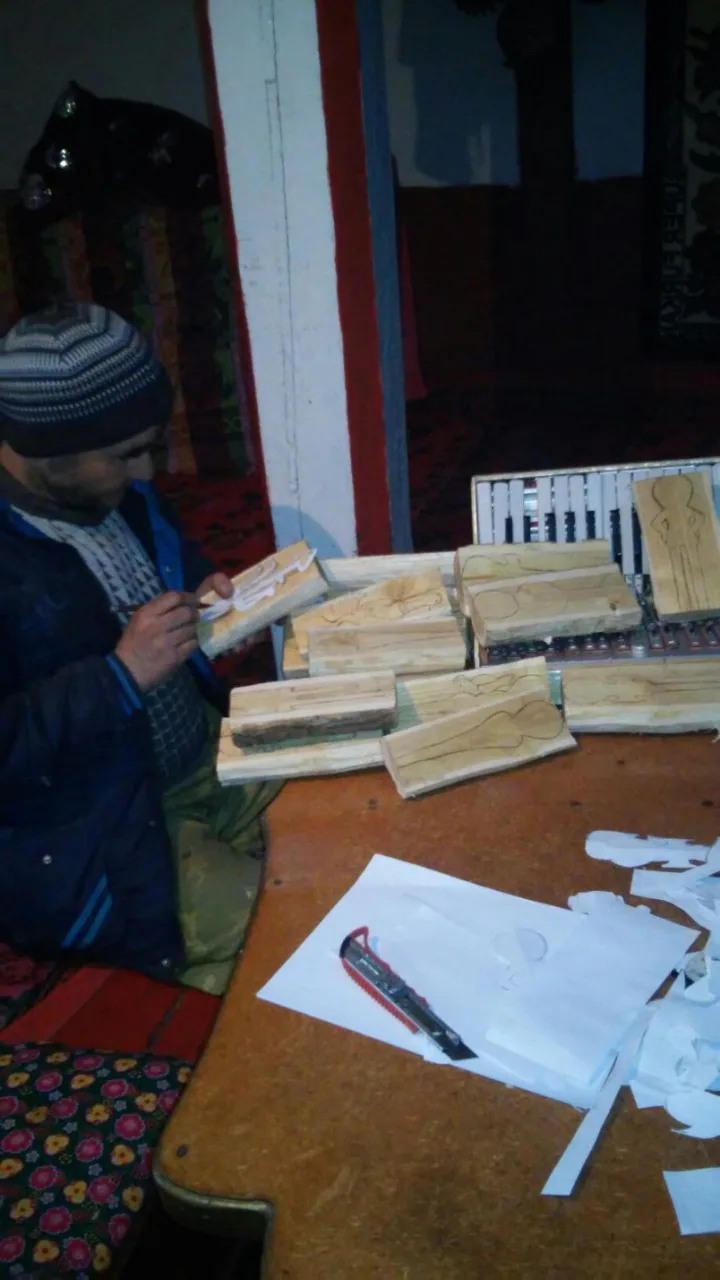
The tablak is standing right there on the table, drying.
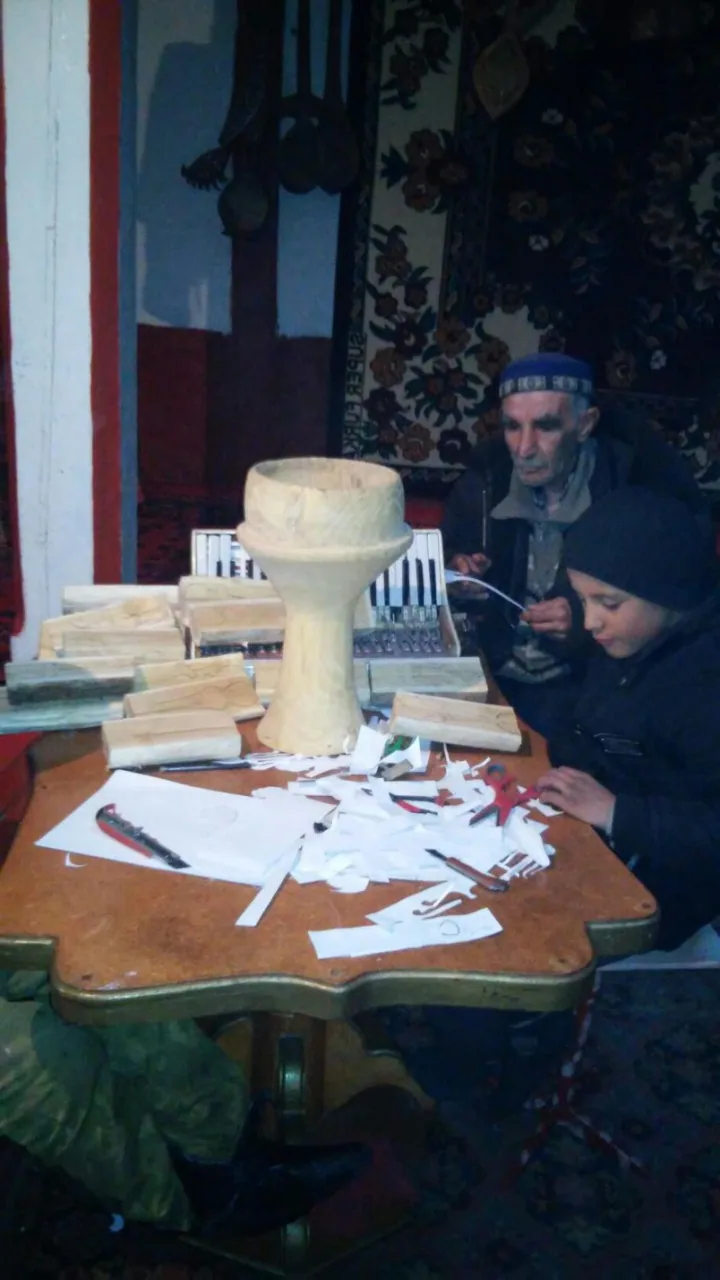
While the tablak and Tanbur wait for the next stage of processing, the master and his pupils begin sawing souvenir mini-rubabs.
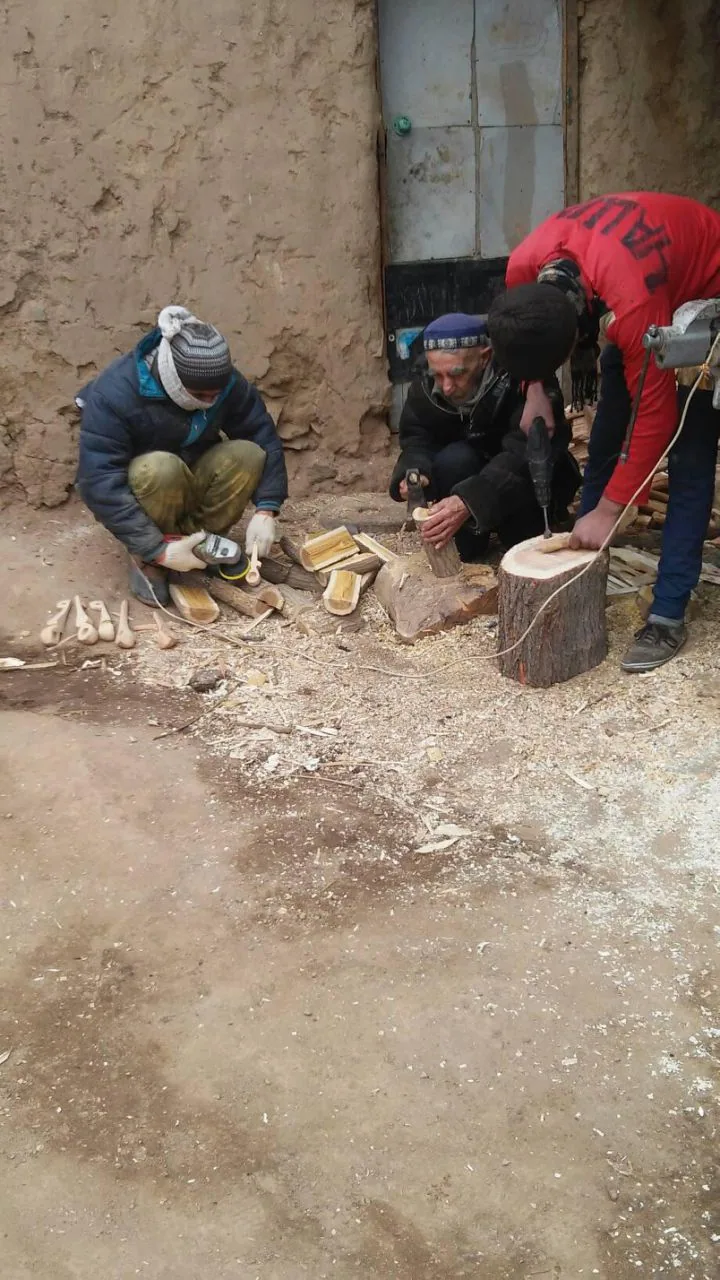
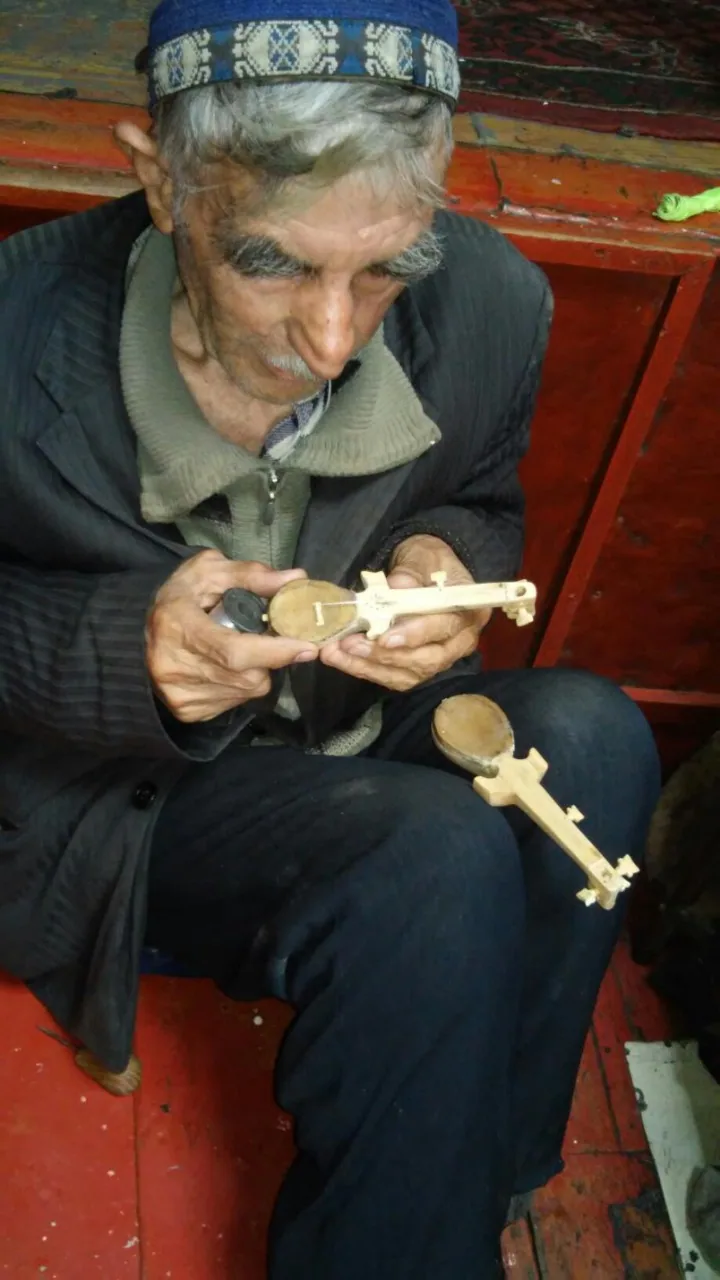
Souvenir mini-rubabs, 25 types in total, have been used since the 1970s. At the same time, one of the pupils is working on an ancient rubab from Afghan Badakhshan.
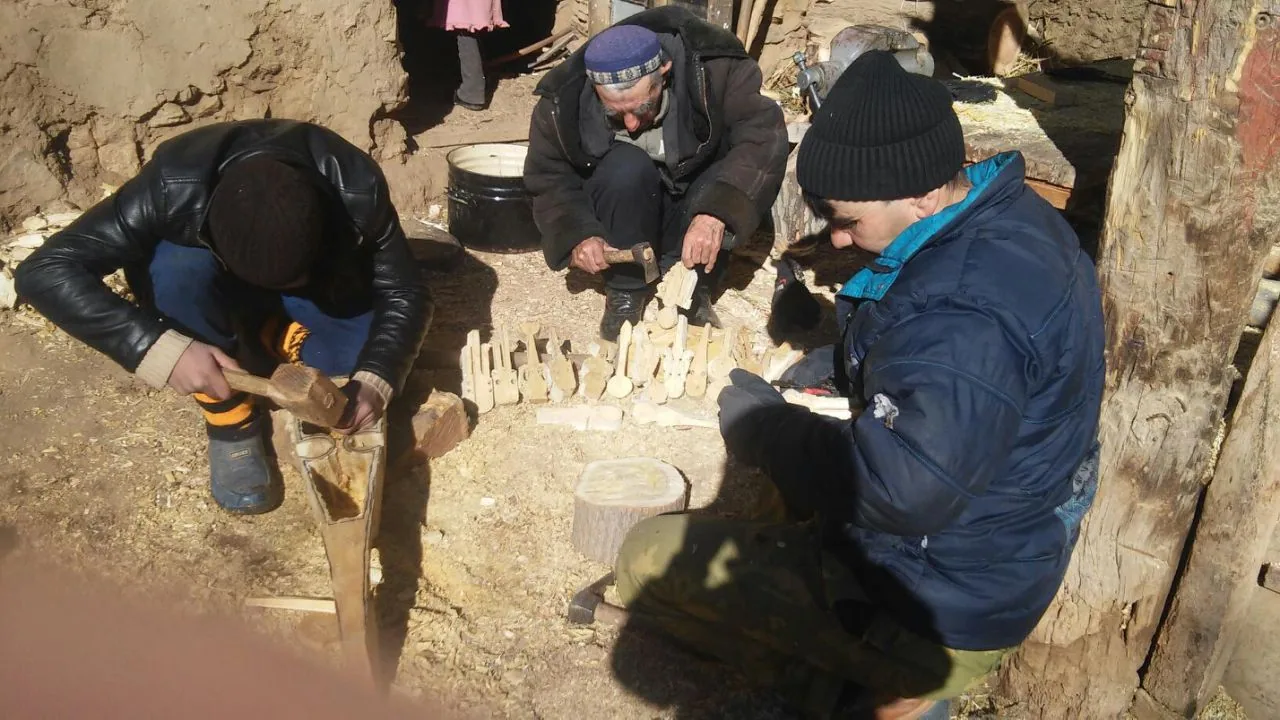
Now finer work on the mini-rubabs lies ahead. The tablak is still waiting its turn.
Meanwhile, Ustod Masayn and his son have already stretched a hide over the Badakhshan rubab and carved the model of the next instrument.
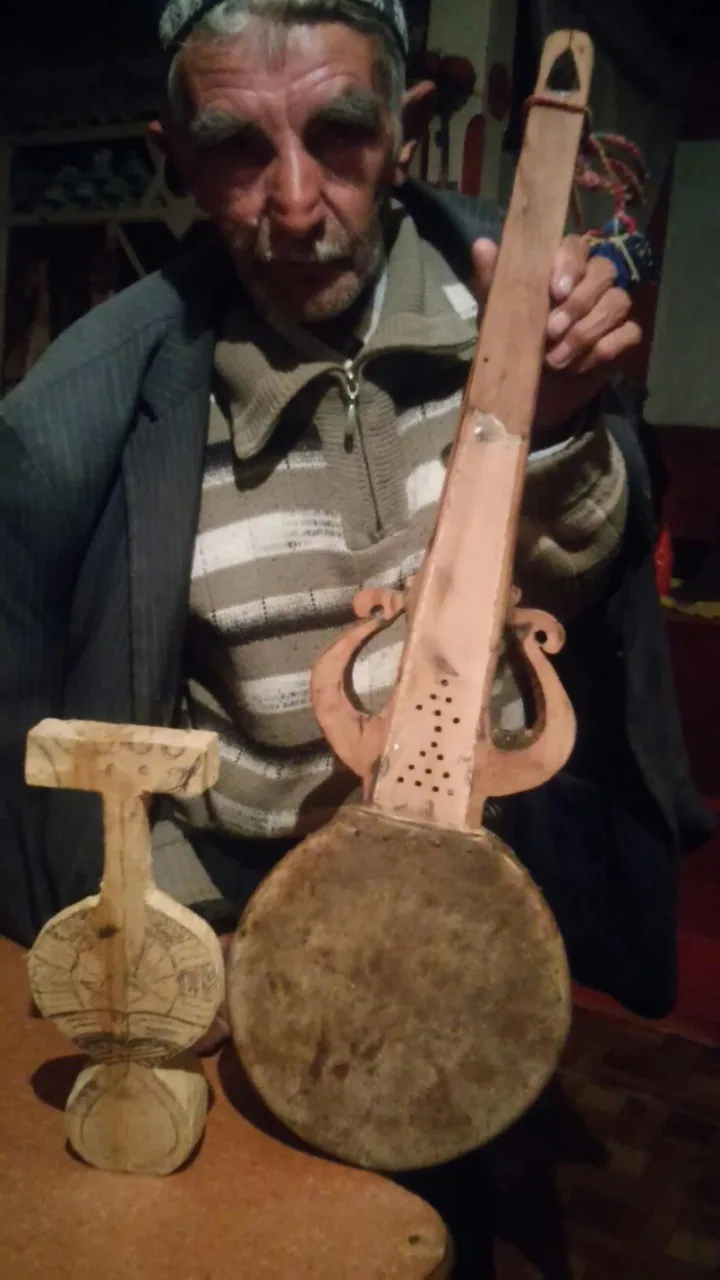
The souvenir rubabs are exactly like the standard ones.
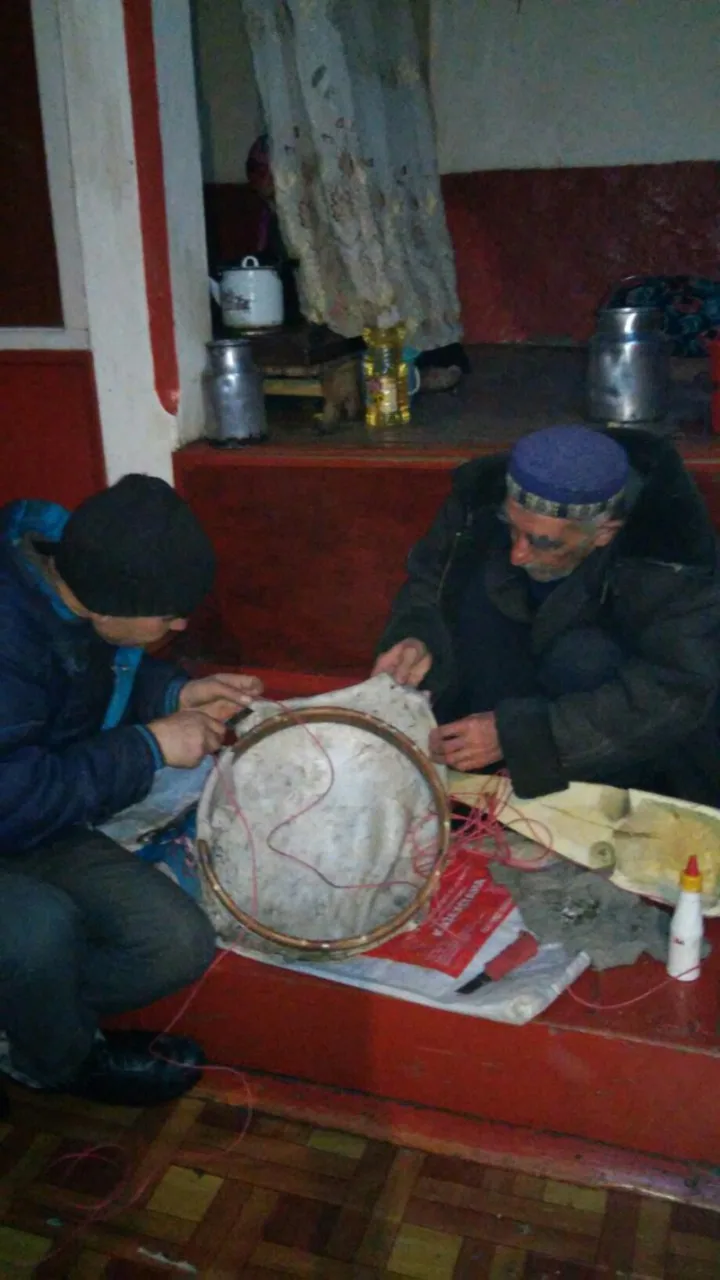
In parallel, “along the way”, a doira was made; cowhide was stretched over it and over the Afghan rubab.
 1 / 3
1 / 3The long-awaited moment for the tablak has arrived: the final touches are complete and it is ready for use.
Only the strings remain to be stretched on the Afghan rubab, and the instrument will be ready.
But the “hit of the season” was the rubab whose model was carved last.
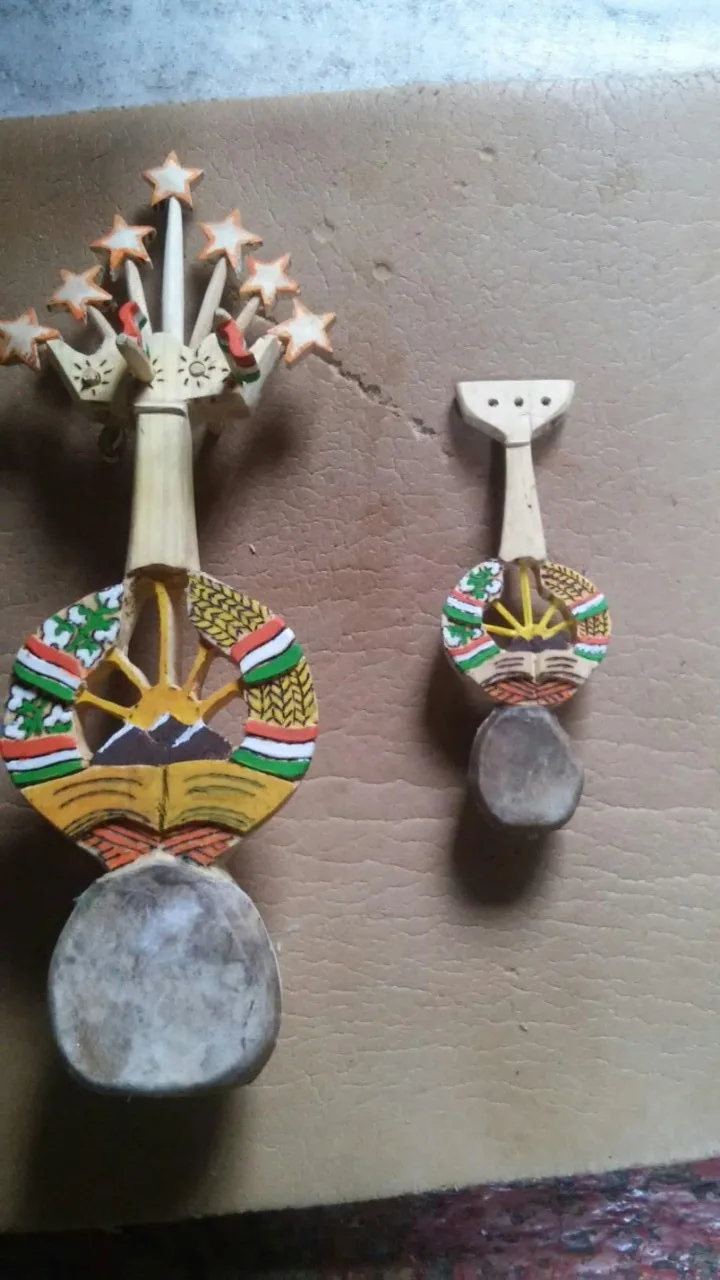
A rubab in the shape of a coat of arms and its similar smaller brother are a real decoration for the Navruz celebration.
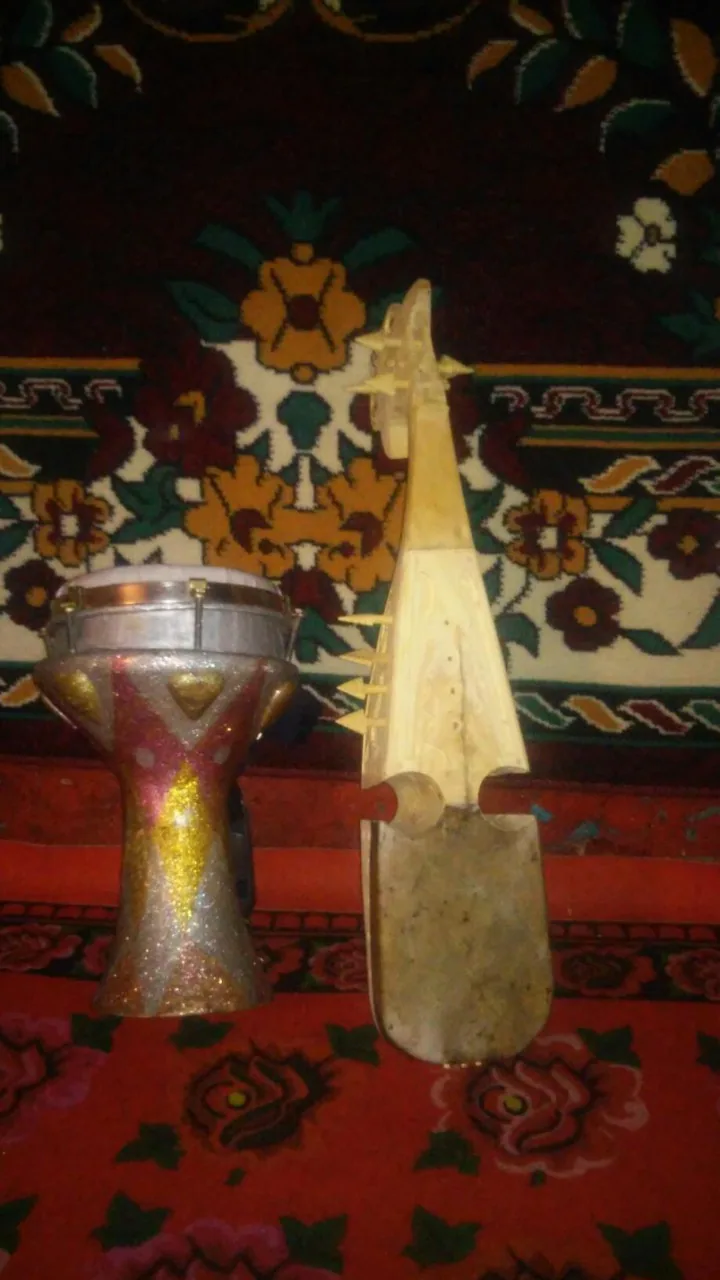
The reader may have the impression that making musical instruments is an easy and quick process, but this is not so. It is a difficult creative process requiring considerable ingenuity and skill.
Navruz is not only a season when one can start life anew; it is a holiday for which one can make something good, something that warms not only the eye but also the soul, as Ustod Masayn did.