
This summer was very effective for the “Gulu Giyoh” organization.
This year, the summer was marked by not only collecting medicinal plants, collecting “bit by bit” of ancient folklore, conducting trainings about natural products and Pamir heritage for local residents, but also meetings with representatives of various organizations for closer cooperation and promotion of own ideas.
In August 2014 Polish project coordinators, colleagues, and representatives of the SDF visited Tajikistan and Badakhshan for the second time. The program of the guests was very intense. Although they spent a week in Badakhshan, in these few days they achieved a great deal.
During this trip, they visited volunteers living in different villages of the Ishkashim district, talked to them about the difficulties of the project, and discussed new plans.
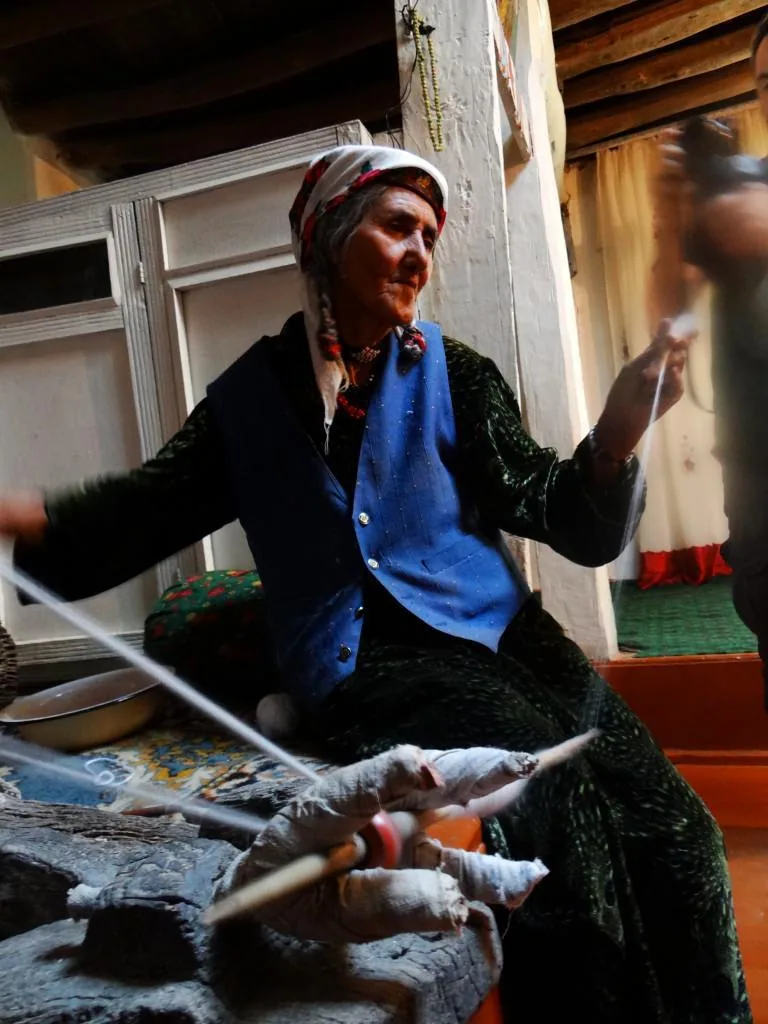
In the village of Mulvoj, local resident Gul Davlatmamadova demonstrated the process of spinning yarn.
 1 / 4
1 / 4In addition, here they visited the master of musical instruments Shakar Ibrohimov. They filmed an interview, which could be found on the site.
In the village of Kozdeh, they visited beekeeper Sardorov Ikbolhon. He told about changes in his small business after a trip to Europe.
 1 / 2
1 / 2They met with a unique “musical” master from Andarob village, who makes rubabs, a kind of national musical instrument, of different shapes and textures. An interview with him can also be found on the site.
 1 / 2
1 / 2They visited a local dairy farm where Nasratmo Jahonova described the process of making milk products. There is a video, which could be found on the site.
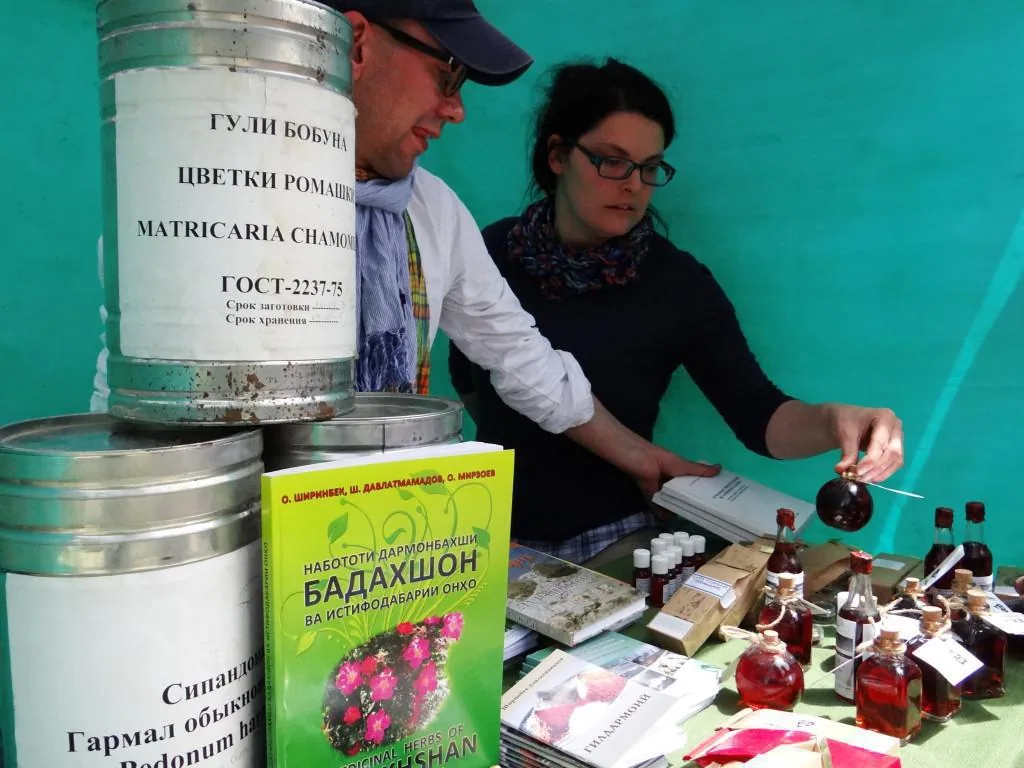
On 15–16 August they participated in the “Pamir Invest Forum”. An international investment forum “Pamir Invest 2014” was held in Khorog with the participation of local and foreign investors, entrepreneurs, and representatives of state and international organizations. The entrepreneurs presented developed business concepts containing ideas for the establishment and development of tourism and services. “Gulu Giyoh” participated in the exhibition and presented its books and products within its activities in the current project. We used the opportunity to build partnership bridges with new organizations.
 1 / 8
1 / 8They visited the construction site of a “Gulu Giyoh” pharmacy next to a sanatorium in the village of Avj.
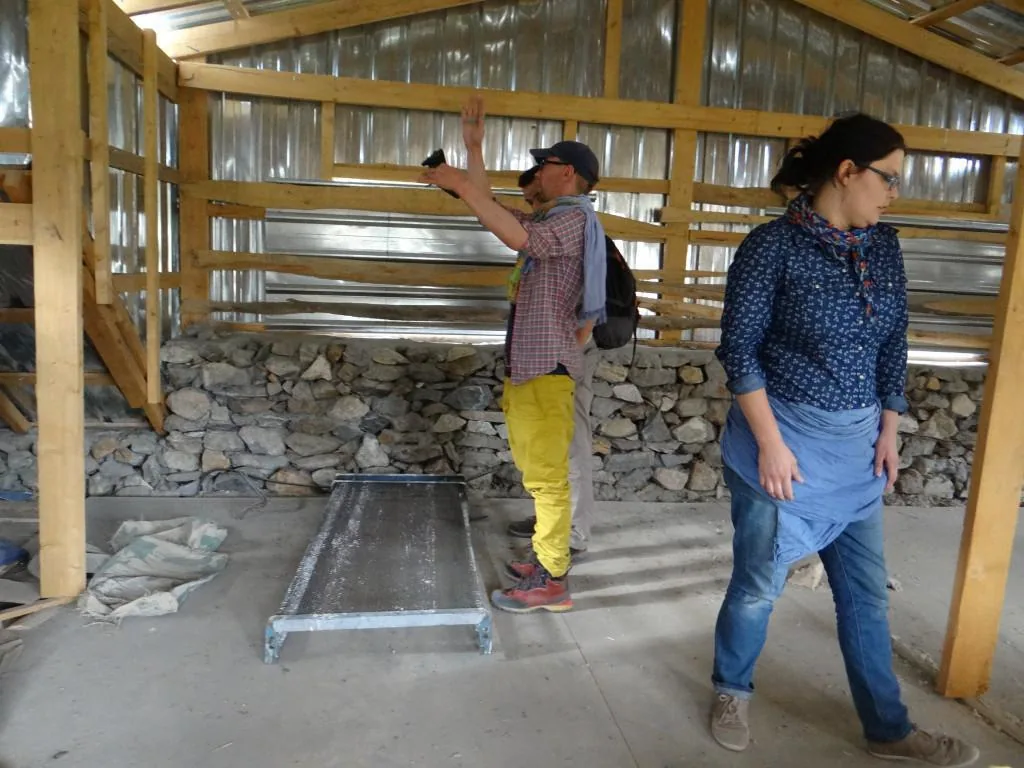 1 / 4
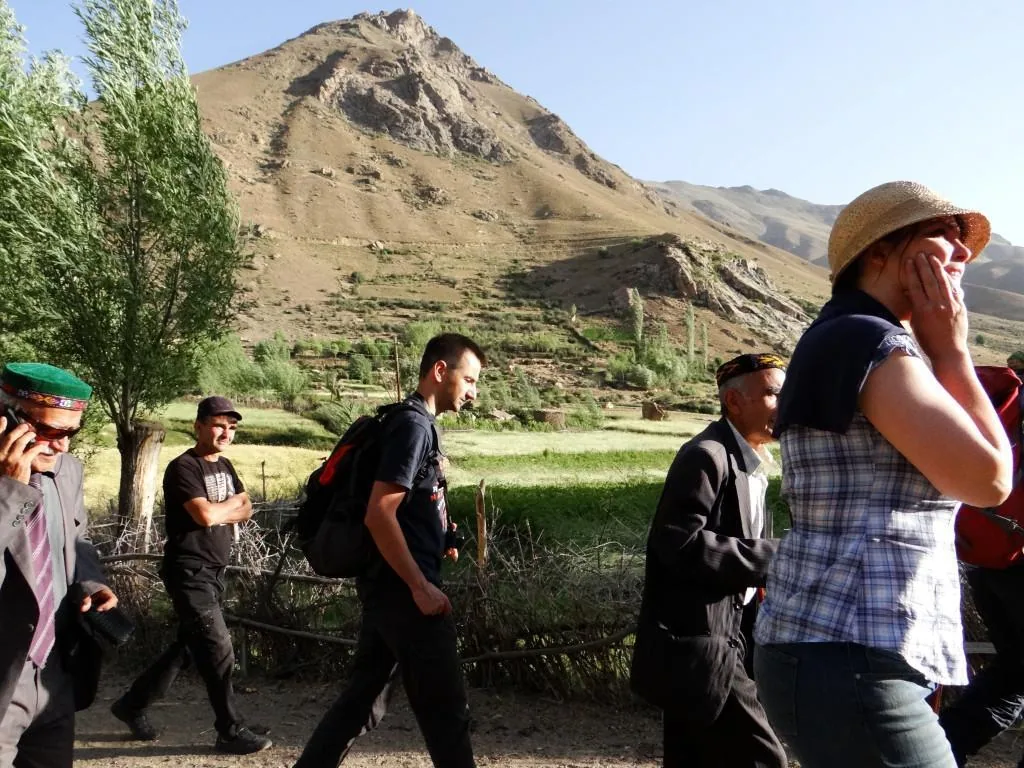
1 / 4On the day of departure, all the young people together with the guests went to the mountains, to the place where a Kyrgyz post was once located.
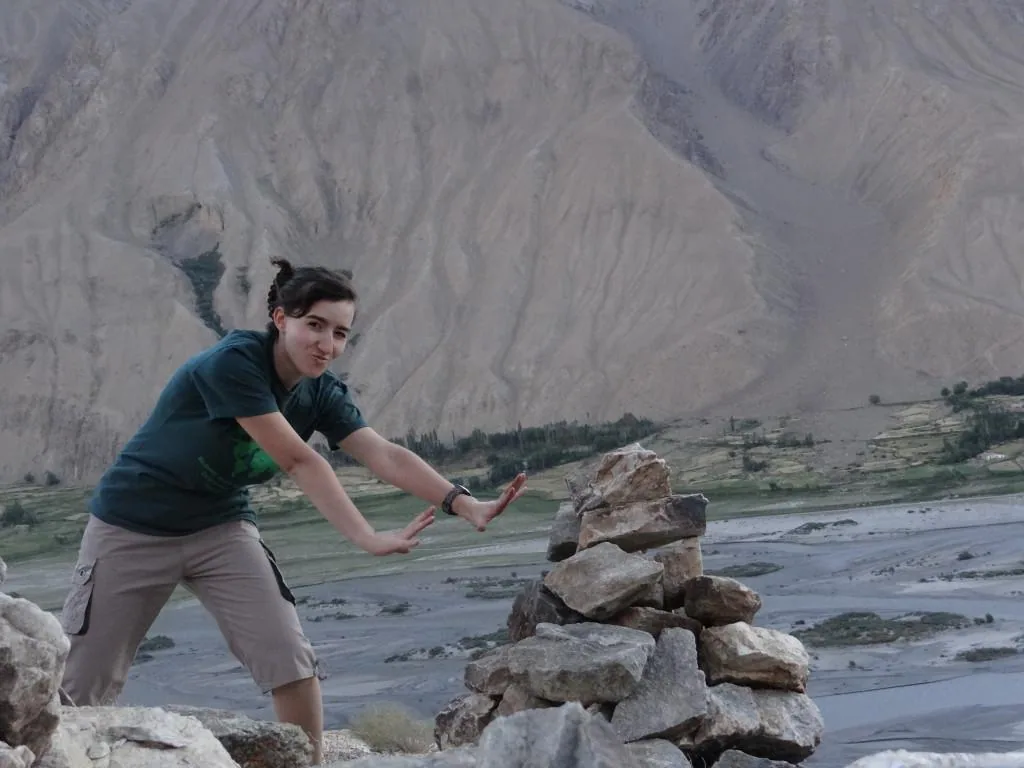 1 / 2
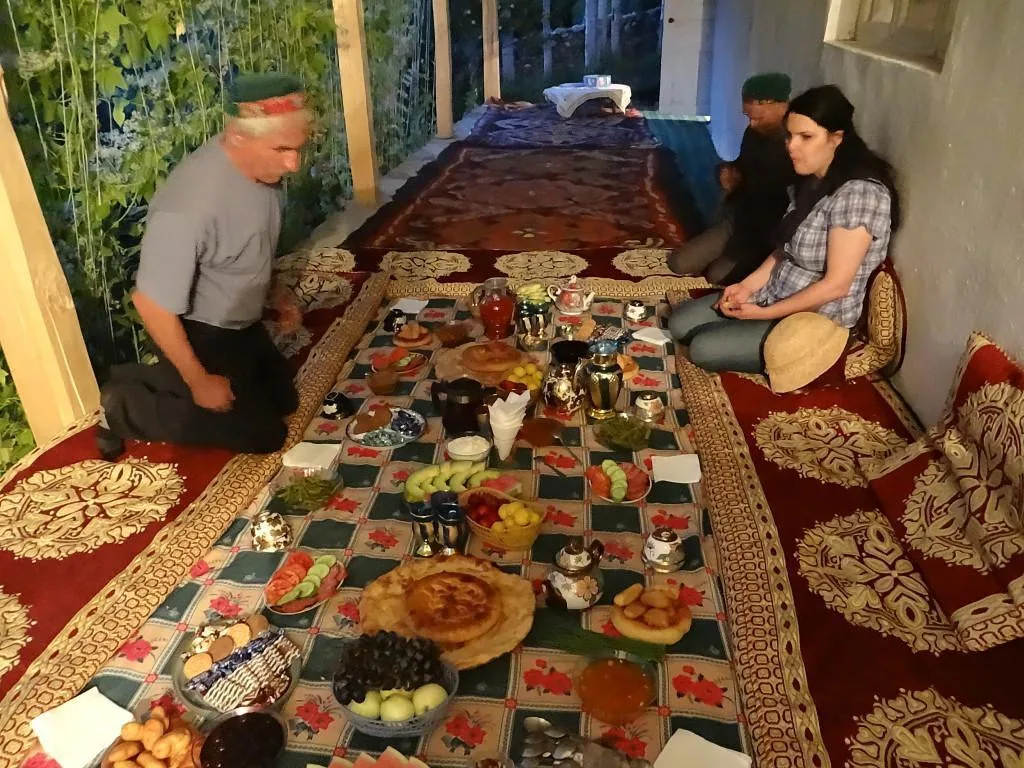
1 / 2During the whole trip in Badakhshan Polish colleagues tasted traditional Tajik food. In addition, they became acquainted with local folklore.
A few days later, after the departure of the Polish colleagues, there was a big meeting with representatives of the NGO “Zan va Zamin” and the Institute of Genetics. We discussed ways of working together. The same day, a video was filmed with the director of “Gulu Giyoh”, Shirinbek Davlatmamadov. The video was shown on the local TV channel “Safina”.
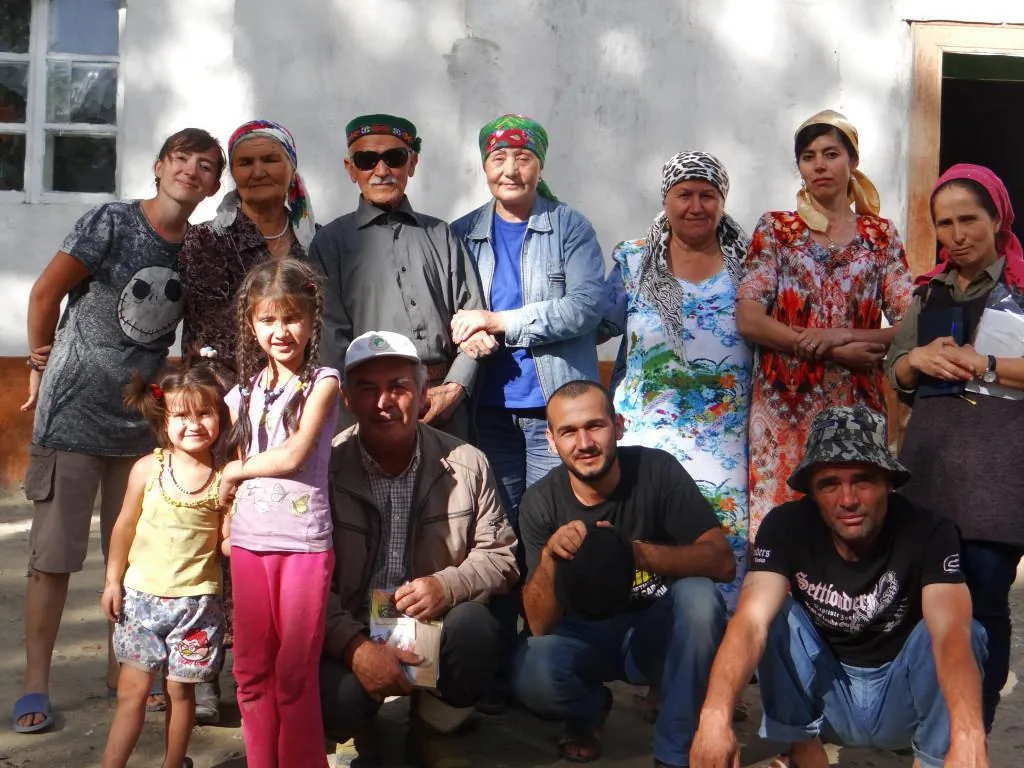 1 / 2
1 / 2After a while, representatives of the SDF visited Badakhshan.
They also had a full program. Getting up at 5 am, they, like real athletes, went to the mountains.
During their stay in Badakhshan they met with volunteers living in different villages of the Ishkashim district.
They visited the Afghan Bazaar, where they bought national Afghan clothes.
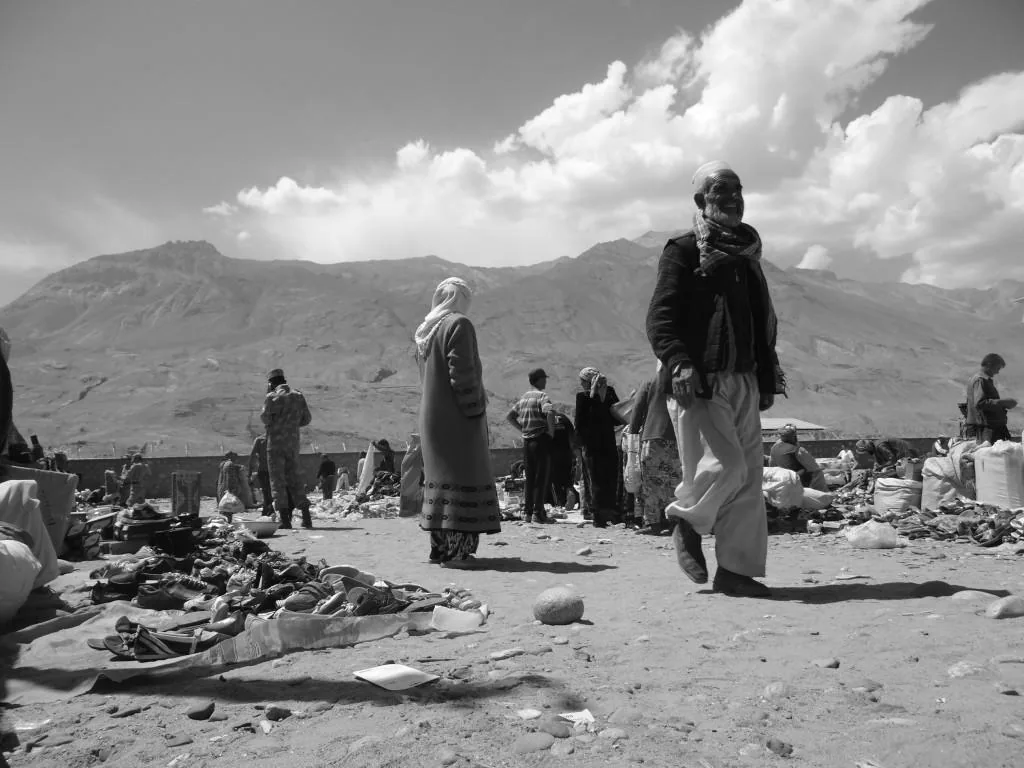 1 / 2
1 / 2Together we visited the museum in the Wakhan, organized by one of the locals in order to preserve traditional things and household items. We saw Kaka fortress dating back to the 3rd century.
On the day of departure, the guests were taken on a mini-tour of the village of Avj, where the thickets of sea buckthorn surprised them.
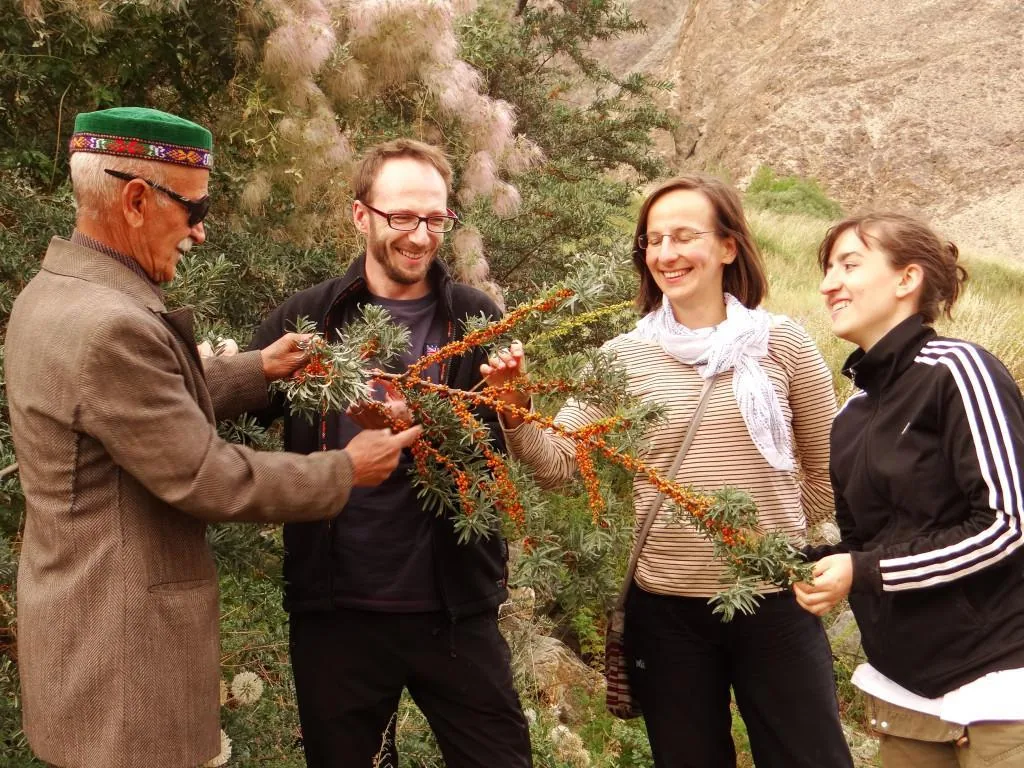 1 / 2
1 / 2As with other foreign guests, representatives of the SDF tasted traditional Pamir foods. Moreover, judging by their reviews, they liked it.
Trainings
Also, during the implementation of the project this summer, “Gulu Giyoh” held 4 training sessions on the natural products of Badakhshan and traditional herbal therapy, with the active participation and support of volunteers from the target areas. These sessions included lectures, seminars and trainings on herbal therapy, folk medicine, sustainable development of social entrepreneurship and marketing strategy.
Information on the most common herbs in the territory of Badakhshan was given in a simple and understandable way. The audience was introduced to the website of PO “Gulu Giyoh” (www.gornobadakhshan.org), where they could find information about herbs and herbal remedies of Badakhshan. The attendants also received information about mineral springs of Badakhshan, most of which are located in the Ishkashim District. Their useful properties and medical indications were emphasized to promote the cost-effectiveness of ethnic medicine among the indigenous population.
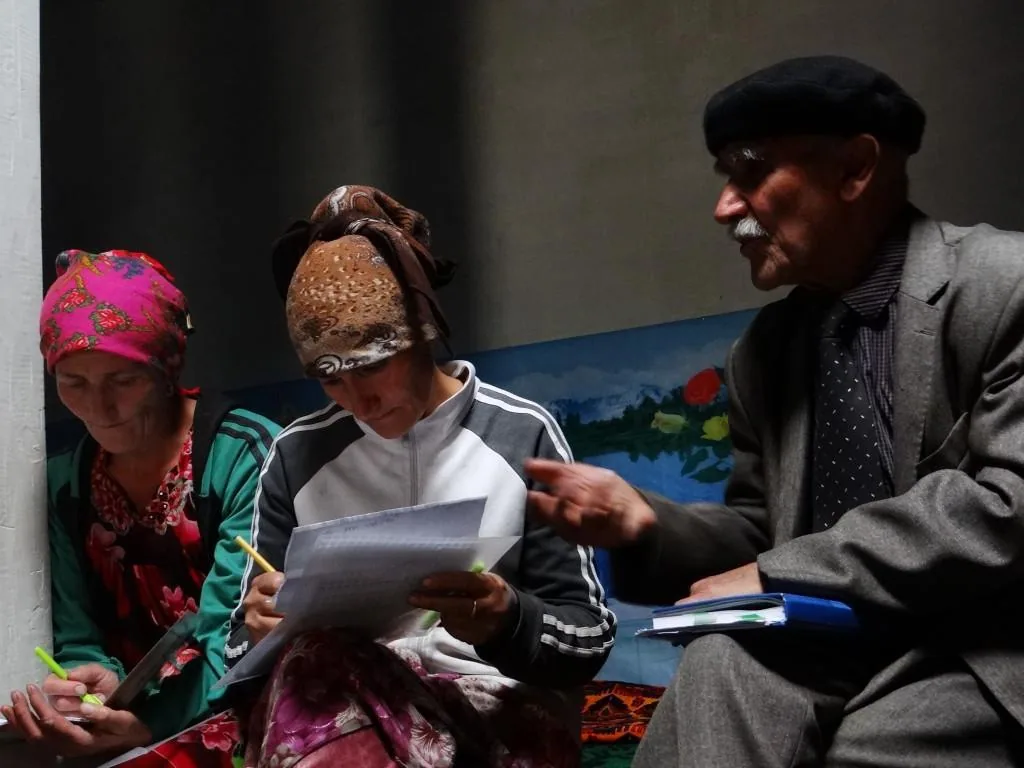 1 / 2
1 / 2Training schedule
| Trainings, seminars | Date | Place of trainings | Number of participants |
|---|---|---|---|
| 1. | 01-07-2014 | Sumjin | 30 |
| 2. | 26-07-2014 | Mulvoj | 30 |
| 3. | 27-08-2014 | Kozideh | 31 |
| 4. | 29-08-2014 | Shanbedeh | 30 |
| Total: | 4 days | 4 target areas | 121 |
The trainings and seminars were aimed at improving the audience’s educational level in issues of ethnic medicine and ways to promote natural products among tourists and local people. They were conducted in a simple way to ensure that everyone understood the trainer. A wide range of interactive tools was used: group discussions, demonstrations of herbs, presentations, case studies, and examples from personal experience. Participants received handouts of the herbs-picking schedule. Attention was given to both theoretical and practical knowledge, and short pre- and post-session questionnaires were completed.
Participants were taught ways to promote local natural products, as well as the importance of using medicinal herbs and springs as a source of a healthy way of life.
Program of training
- Presentation of Gulu Giyoh activities in Badakhshan and prospects for work in the cooperative;
- main aspects of herbal medicine;
- use of raw materials for natural products;
- ways of using plants: parts to be used and time of picking;
- handouts of the herbs-picking schedule;
- demonstration of herbs and preparation of main herbal products (practical training);
- mineral springs of Badakhshan and their use;
- sustainable development;
- marketing strategy and ways to promote natural products on the local market and among tourists;
- indicator questionnaires and group discussion.